
Dinner

Classic Pesto Pasta (with Optional Chicken)

Elowen

Elowen

June 30, 2026

Fresh basil pesto, Parmesan, pine nuts and garlic coat the pasta with the help of a little reserved cooking water. The sauce is tossed through the hot pasta off the heat, keeping the basil fresh while creating a glossy coating in about 20 minutes.

Share Recipe:
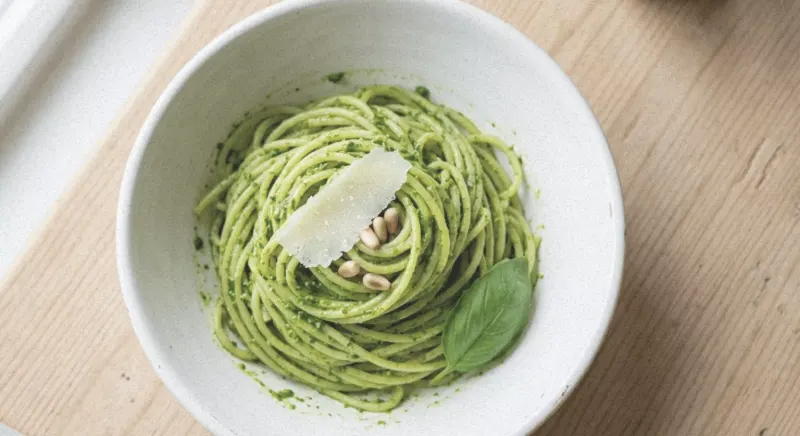
Overhead shot of bright green pesto pasta twirled in a white bowl, topped with pine nuts, parmesan shavings, and a basil leaf.

What Makes the Pesto Coat the Pasta Properly

  • The pesto is made from fresh basil, Parmesan, toasted pine nuts, garlic and olive oil, so the flavour comes from the sauce itself rather than a bottled shortcut.
  • A little reserved pasta cooking water loosens the pesto and helps it spread over the pasta instead of sitting in oily patches.
  • The pesto is tossed through the pasta away from direct heat, which helps the basil keep a fresher colour and flavour.
  • Cooked chicken can be folded in at the end without changing the basic pesto method, making it easy to keep the pasta vegetarian or make it more substantial.

The Ingredients That Shape Fresh Pesto

Fresh basil provides the main flavour, while toasted pine nuts, Parmesan, garlic and extra-virgin olive oil give the pesto its richness and texture. The pasta and a little reserved cooking water bring everything together at the end.

  • Pasta (or 12 oz, trofie, penne, fusilli or spaghetti)Choose a shape that holds pesto well, such as trofie, fusilli, penne or spaghetti, and cook until al dente.

  • Fresh basil leaves, packed (or 2 cups)Fresh, bright green basil leaves give the best flavour and aroma; avoid wilted or darkened leaves.

  • Pine nuts, toasted (or ⅓ cup)Toast the pine nuts briefly in a dry frying pan until lightly golden and fragrant.

  • Parmesan, freshly grated (or ½ cup)Freshly grated Parmesan adds saltiness and helps give the pesto a creamy texture.

  • Garlic cloves, peeledAdds savoury depth to the fresh basil pesto.

  • Extra-virgin olive oil (or ½ cup)Provides the rich consistency of the pesto and helps bind the ingredients together.

  • SaltSeason carefully, as Parmesan already contributes salt.

  • Black pepperAdds gentle warmth and balances the rich flavours.

  • Reserved pasta cooking water (or ½ cup)Starchy cooking water loosens the pesto and creates a smooth emulsion that coats the pasta evenly.

  • Optional cooked chicken: 2 cooked chicken breasts, slicedOptional cooked chicken can be sliced and folded through the pasta for a more substantial meal.

Need to convert cups to grams for this recipe?

Use our free Cups to Grams Converter for practical ingredient conversions.

Open Cups to Grams Converter

How to Make Pesto Pasta

Step 1: Boil Pasta & Reserve Cooking Water

Bring a large saucepan of well-salted water to the boil. Add the pasta and cook according to the packet instructions until al dente. Just before draining, reserve about 120ml (½ cup) of the starchy cooking water, then drain the pasta.

Step 2: Toast Pine Nuts

Toast the pine nuts in a dry frying pan over medium heat for 2–3 minutes until lightly golden. Watch them closely, as they can burn quickly.

Step 3: Blend Fresh Pesto

Place the fresh basil, toasted pine nuts, garlic, Parmesan, salt and pepper in a food processor. Pulse until finely chopped. With the motor running, slowly drizzle in the extra-virgin olive oil until smooth.

Step 4: Emulsify Pasta & Pesto

Return the drained hot pasta to the warm saucepan off the heat. Add the fresh pesto and a few tablespoons of the reserved warm pasta water. Toss thoroughly, adding more pasta water as needed, until the pasta is coated in a glossy sauce.

Step 5: Fold Chicken & Serve

If using cooked chicken, fold the slices through the pasta. Transfer to warm bowls and finish with extra grated Parmesan, toasted pine nuts and fresh basil.

Ways to Change the Pesto Pasta

Cooked chicken can be folded through at the end, or replaced with sautéed prawns or a small amount of crisp pancetta if you want a different protein. For extra vegetables, add ingredients such as peas, courgette or spinach, cooking them separately or adding them at the appropriate stage so they do not water down the pesto. You can also leave the pasta completely vegetarian and finish it with extra Parmesan and toasted pine nuts. Keep any additions fairly simple so the fresh basil pesto remains the main flavour.

Finish the Pasta Before It Reaches the Table

Serve the pasta as soon as the pesto has formed a loose, glossy coating. Finish with extra grated Parmesan, a few toasted pine nuts and fresh basil if available. If the pasta begins to tighten before serving, toss through a small splash of the reserved cooking water rather than adding more olive oil. A simple green salad or garlic bread can be served alongside, but the pesto pasta is substantial enough to stand on its own.

Take the Pan Off the Heat Before Adding Pesto

Fresh pesto does not need prolonged cooking. Once the pasta has been drained, return it to the warm pan but keep the pan off direct heat before adding the pesto. Toss in a small amount of reserved pasta water and add more only as needed until the sauce coats the pasta smoothly. The starch in the cooking water helps the pesto cling to the pasta, while keeping the pan off the hob protects the fresher basil flavour and reduces the chance of the sauce becoming oily or separating.

Storing and Reheating Pesto Pasta

Cooked pesto pasta is best eaten fresh, but leftovers can be kept in an airtight container in the fridge for up to 3 days. To reheat, warm gently in a frying pan over low heat with a splash of water to loosen the sauce, or enjoy cold as a pasta salad.

Keep homemade unmixed pesto refrigerated in a clean, airtight container and use it promptly. For longer storage, freeze pesto in small portions or ice-cube trays, then stir in fresh Parmesan after thawing.

Classic Pesto Pasta (with Optional Chicken)

Classic Pesto Pasta (with Optional Chicken)

No reviews yet
By Elowen VanceEasy

Fresh basil pesto, Parmesan, pine nuts and garlic coat the pasta with the help of a little reserved cooking water!

Prep Time
10 mins
Cook Time
10 mins
Total Time
20 mins
Yield / Servings
4 Servings

Equipment Needed

  • Food processor or blender
  • Large saucepan or pot
  • Colander
  • Small frying pan
  • Tongs or pasta server

Ingredients

Adjust yield quantities or check items off as you prep.

Scale:

Instructions

  1. Bring a large saucepan of salted water to the boil. Cook pasta until al dente, reserve 120ml (½ cup) cooking water, then drain.
  2. Toast pine nuts in a dry frying pan over medium heat for 2–3 minutes until golden.
  3. In a food processor, pulse basil, pine nuts, garlic, Parmesan, salt and pepper. Drizzle in olive oil until smooth.
  4. Return pasta to saucepan off the heat. Add pesto and a splash of reserved pasta water; toss until glossy and evenly coated.
  5. Fold in sliced cooked chicken if using. Serve in warm bowls with extra grated Parmesan and pine nuts.

Nutrition Information

Per ServingServing: 1 bowl (~1.5 cups)
Calories
480kcal
Total Fat
24g
Protein
14g
Carbohydrates
54g
Dietary Fiber4g
Total Sugars2g
Sodium410mg
Calcium180mg
Iron3mg

Made this recipe at home?

Share a photo with friends and family! We love seeing your culinary creations.

Frequently Asked Questions

Yes. Walnuts, almonds, pumpkin seeds or sunflower seeds can be used instead of pine nuts.
Basil darkens when exposed to air and heat. Avoid over-processing the pesto and combine it with the pasta off the heat. A small squeeze of lemon can also be added if you prefer.
Yes. Freeze pesto without the Parmesan in ice-cube trays, then transfer to a freezer bag. Stir in freshly grated Parmesan once thawed.

User Reviews & Ratings

Average Rating
Based on 0 reviews

Leave a Review

Rating
Your name and review may be displayed publicly. Your email address will not be published. See our Privacy Policy.

Reviews (0)

Classic Pesto Pasta (with Optional Chicken)