Baking

Easy UK Scone Recipe – Classic British Scones

Elowen

Elowen

August 15, 2026

Light, fluffy British scones made with simple ingredients, perfect with jam and clotted cream.

Share Recipe:
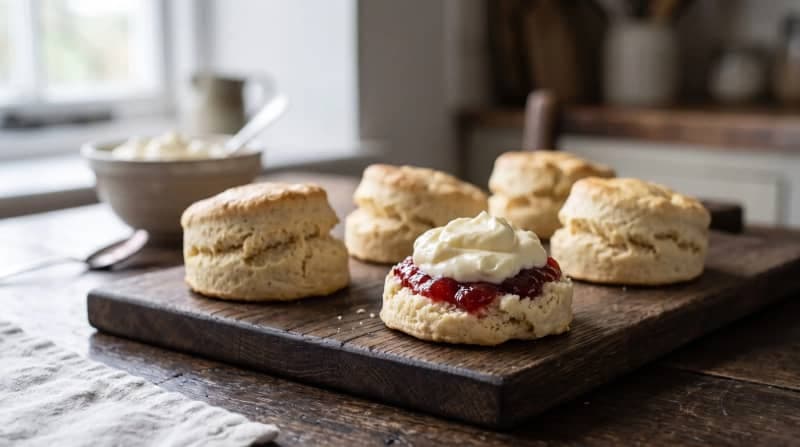
Split British scones with strawberry jam and clotted cream on a wooden board

The Details Behind a Light British Scone

  • Cold butter is rubbed into the flour rather than melted, leaving the dough light enough to rise without becoming greasy.
  • The dough is mixed only until it comes together, which helps avoid developing too much gluten and making the scones tough.
  • Patting the dough to a generous thickness gives the scones enough height to split easily once baked.
  • Cutting straight down with the cutter leaves the sides free to rise, while a light brush of milk helps the tops colour in the oven.

The Basics for a Classic Scone Dough

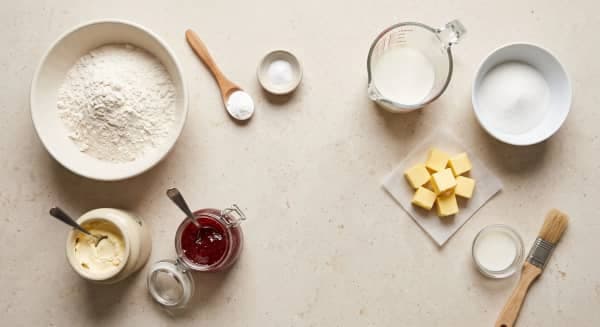
The dough uses a short list of baking staples, with self-raising flour for lift, cold butter for tenderness and whole milk to bring everything together without making the mixture too rich.

Self-raising flour, cold cubed butter, caster sugar, milk and baking powder for British scones
  • Self-raising flourUse standard UK self-raising flour.

  • Baking powder

  • Fine salt

  • Cold unsalted butter, cut into small cubesKeep cold until ready to use. Small cubes rub into the flour quickly and evenly.

  • Caster sugarProvides light sweetness without overpowering the jam and clotted cream served with the scones.

  • Whole milkMix in gently to form a soft, cohesive dough without prolonged kneading.

  • Whole milk, for brushing the tops

  • Strawberry jam, for serving (optional)Not included in the nutrition estimate.

  • Clotted cream, for serving (optional)Not included in the nutrition estimate.

Need to convert cups to grams for this recipe?

Use our free Cups to Grams Converter for practical ingredient conversions.

Open Cups to Grams Converter

How to Make British Scones

Step 1

Preheat the oven to 220°C, or 200°C fan. Line a baking tray with baking parchment before starting the dough so it is ready as soon as the scones have been shaped.

Baking tray lined with parchment ready for British scones

Step 2

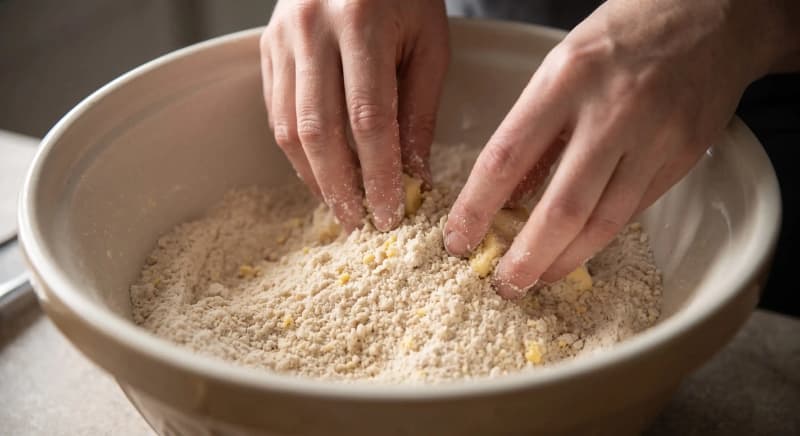
Put the self-raising flour, baking powder and salt into a large mixing bowl. Add the cold butter and rub it into the flour with your fingertips until the mixture resembles fine breadcrumbs and no large pieces of butter remain.

Step 3

Stir the caster sugar through the flour mixture. Pour in the milk and use a table knife to bring everything together gently. Stop mixing once a soft dough forms. Avoid repeated kneading, which can make the baked scones dense.

Step 4

Turn the dough onto a very lightly floured work surface. Bring it together with minimal handling, then pat it gently to about 3cm thick. There is no need to use a rolling pin; keeping the dough thick and lightly handled helps preserve its texture.

Step 5

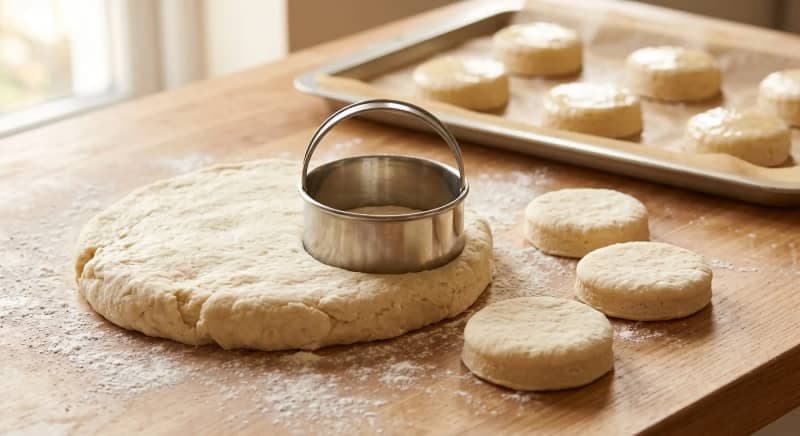
Cut out rounds with a 6cm cutter, pressing straight down and lifting the cutter straight back up rather than twisting it. Place the rounds on the prepared tray. Gather the scraps gently and cut the remaining scones with as little reworking as possible. Brush the tops lightly with the reserved milk, keeping it off the cut sides.

Round cutter pressed straight down through scone dough with cut rounds beside it

Step 6

Bake for 10–12 minutes until the scones are well risen and lightly golden on top. The centres should look baked rather than wet or pasty. Transfer the finished scones to a wire rack and allow them to cool briefly before serving.

Handle the Dough Lightly and Cut Straight Down

Scone dough needs less handling than bread dough. Once the milk has been added, mix only until there are no obvious dry patches, then bring the dough together gently rather than kneading it smooth. Pat it out to roughly the existing thickness in the recipe and use only enough flour on the work surface to stop sticking. When cutting the rounds, press the cutter firmly straight down and lift it straight back up instead of twisting; twisting can compress the cut edge and make it harder for the scone to rise evenly. Brush only the tops with milk, avoiding the cut sides where possible.

Storage & Freezing

Scones are at their best on the day they are baked. Once completely cool, keep unfilled scones in an airtight container for short-term storage, or freeze them for longer storage. Thaw frozen scones at room temperature and refresh them for a few minutes in a low oven before serving. Store strawberry jam and clotted cream separately and add them only when serving. Keep clotted cream refrigerated and follow the storage instructions and use-by information on its packaging.

Jam and Clotted Cream at Serving Time

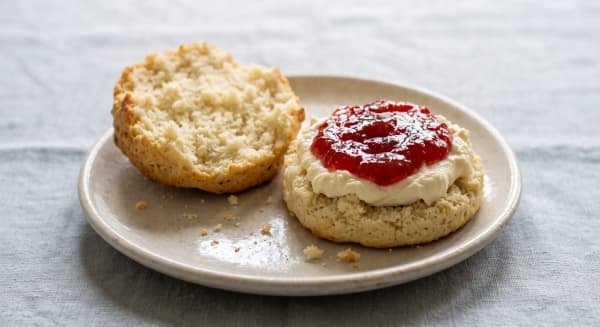
Let the scones cool until they are comfortable to handle, then split them horizontally. Serve them slightly warm with strawberry jam and clotted cream, adding the toppings just before eating so the crumb stays soft and the cream remains fresh.

Split British scone topped with strawberry jam and clotted cream
Easy UK Scone Recipe – Classic British Scones

Easy UK Scone Recipe – Classic British Scones

No reviews yet
By Elowen VanceMedium

Light, fluffy British scones made with simple ingredients, perfect with jam and clotted cream!

Prep Time
15 mins
Cook Time
12 mins
Total Time
27 mins
Yield / Servings
8 Servings

Equipment Needed

  • Large mixing bowl
  • Kitchen scales
  • Measuring jug
  • Measuring spoons
  • Table knife or blunt butter knife
  • Baking tray
  • Baking parchment
  • Round cutter, approximately 6cm
  • Pastry brush
  • Wire cooling rack

Ingredients

Adjust yield quantities or check items off as you prep.

Scale:

Instructions

  1. Preheat the oven to 220°C / 200°C fan. Line a baking tray with baking parchment and set it aside ready for the shaped scones.
  2. Combine the flour, baking powder and salt. Rub in the cold cubed butter with your fingertips until the mixture has an even, fine breadcrumb texture.
  3. Stir in the caster sugar. Add the milk and mix gently with a table knife until a soft dough forms. Stop as soon as the mixture holds together.
  4. Turn the dough onto a lightly floured surface. Bring it together gently and pat it to about 3cm thick without repeatedly kneading or rolling it.
  5. Cut rounds with a 6cm cutter, pressing straight down without twisting. Re-shape the scraps only as needed. Place on the tray and brush milk over the tops only.
  6. Bake for 10–12 minutes at 220°C / 200°C fan until risen and lightly golden, with no wet dough in the centre. Cool briefly on a wire rack.

Nutrition Information

Per ServingServing: 1 scone
Calories
230kcal
Total Fat
9g
Protein
4g
Carbohydrates
33g
Dietary Fiber1g
Total Sugars7g

Made this recipe at home?

Share a photo with friends and family! We love seeing your culinary creations.

Frequently Asked Questions

Check the dough thickness and handling first. Pat it to about 3cm thick, avoid repeatedly kneading the dough, and press the cutter straight down instead of twisting it. The oven should also be fully preheated before baking.
Yes. Shape the dough to the same approximate thickness and cut it into neat portions or wedges with a sharp knife. They may look different from traditional round scones, but the basic baking method remains the same.
Yes. Let the baked scones cool completely, then freeze them without jam or clotted cream. Thaw at room temperature and warm them briefly in a low oven before serving.

User Reviews & Ratings

Average Rating
Based on 0 reviews

Leave a Review

Rating
Your name and review may be displayed publicly. Your email address will not be published. See our Privacy Policy.

Reviews (0)

Easy UK Scone Recipe – Classic British Scones