
Baking
Easy Lemon Drizzle Loaf Cake

- Prep
- 15 min
- Cook
- 50 min
- Total
- 1 hr 50 min
- Serves
- 10
Introduction
A soft, buttery sponge is baked in a loaf tin, then soaked while still warm with a mixture of lemon juice and granulated sugar. The juice sinks in and the sugar sets into a thin, crunchy crust on top. There is no icing, no cream filling: the drizzle is the finish. If you are considering a different tin size, check Cake Tin Conversion Calculator. For butter measurements in different units, use Butter Conversion Calculator. For related guidance, read Why Is My Cake Dry? Common Causes and Fixes.
Allow about 1 hour 50 minutes in all: 15 minutes to prepare, 50 minutes to bake and 45 minutes for the cake to cool enough to turn out. It makes ten slices from a 2lb loaf tin.
Related recipes
 Easy Banana Loaf (The banana loaf with the blackest bananas)A simple homemade banana loaf made with very ripe bananas, brown sugar and sour cream or yoghurt for a soft, moist crumb. No mixer is needed, making it an easy way to use up heavily spotted bananas.
 British Ginger Cake Recipe – Moist, Sticky & EasyA moist, sticky British ginger cake with warm spices and a rich flavour, perfect with a cup of tea.
What You'll Need
Equipment
- A 2lb (900g) loaf tin, about 22 × 11 × 6cm, lined with a strip of baking parchment
- A hand whisk or stand mixer
- A fine grater, for the lemon zest
- A skewer or cocktail stick, for pricking the cake
- A wire rack, for cooling
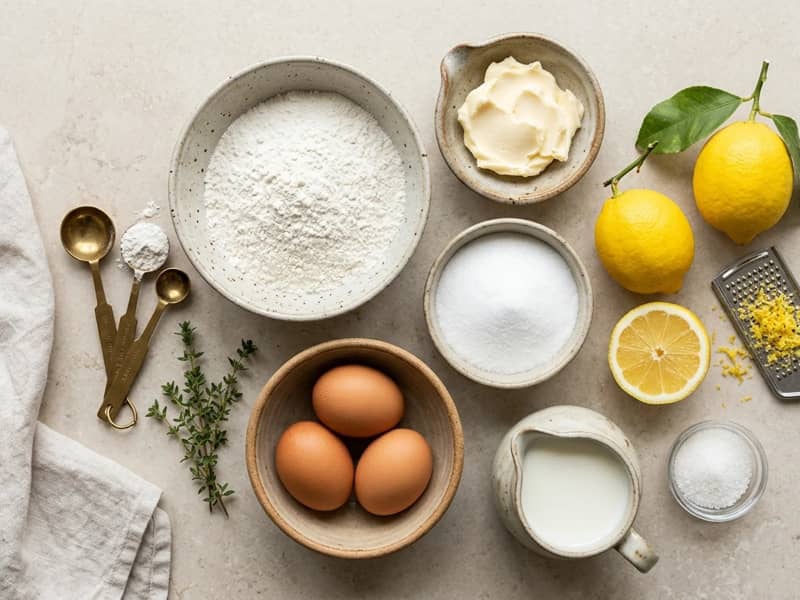
Ingredients
For the sponge
- 175g unsalted butter, at room temperature
- 175g caster sugar
- Finely grated zest of 2 unwaxed lemons
- 3 large eggs, at room temperature
- 175g self-raising flour
- 2 tbsp whole milk
For the drizzle
- Juice of 1½ lemons (about 60–70ml)
- 80g granulated sugar
Soft butter creams better than hard butter, and eggs at room temperature are less likely to split the mixture. Use unwaxed lemons, since the zest goes straight into the sponge. Granulated sugar is important for the drizzle: its larger grains stay crunchy on top rather than dissolving into the cake, which is what gives this cake its signature crust. The 2lb loaf tin is the usual size; a 1lb tin would overflow with this amount of batter.
How to Make Lemon Drizzle Cake
Prepare the Tin and Oven
- Heat the oven to 180°C (160°C fan/gas 4). Grease the loaf tin lightly, then line it with a strip of baking parchment that covers the base and the two long sides, with a little overhang. The paper makes it easy to lift the cake out once the drizzle has set.
Make the Batter
- Rub the lemon zest into the caster sugar in a large bowl with your fingertips for a minute. The sugar will turn pale yellow, and smell strongly of lemon as the zest releases its oils. Add the softened butter and beat with an electric whisk for 3–4 minutes, until pale and fluffy.
- Beat in the eggs one at a time, with a spoonful of the flour added with each egg to stop the mixture curdling. Fold in the rest of the flour gently with a large spoon or spatula, then stir in the milk until the batter is smooth and drops easily off the spoon.
Bake and Drizzle
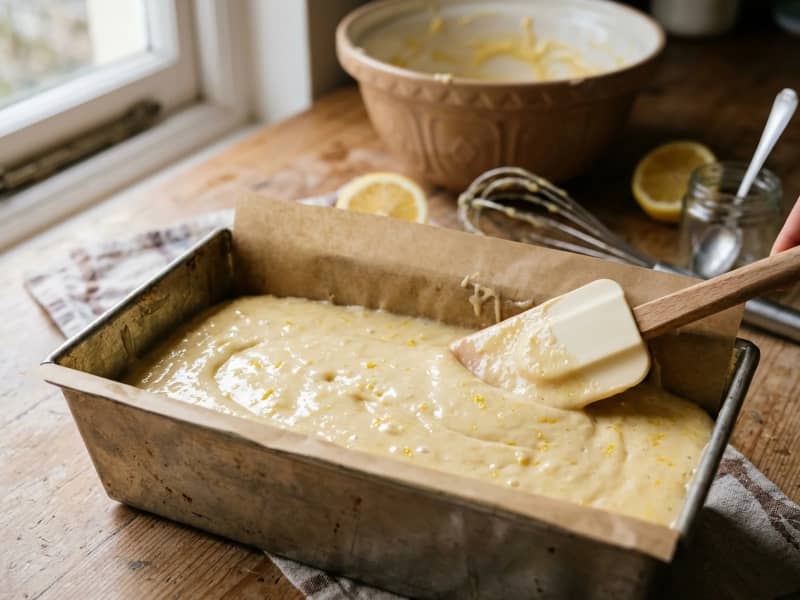
- Spoon the batter into the lined tin and level the top. Bake on the middle shelf for 45–55 minutes, until the cake is risen, golden brown and springs back when pressed lightly in the middle. A skewer pushed into the centre should come out clean or with just a few moist crumbs. If the top is darkening quickly, cover it loosely with foil after 35 minutes.
- While the cake bakes, stir the lemon juice and granulated sugar together in a small bowl. Do not heat it: the sugar should stay crunchy, which is why it is not fully dissolved.
- As soon as the cake comes out of the oven, leave it in the tin and prick the top all over with a skewer, going down to the base. Spoon the drizzle slowly over the hot cake so that it has time to soak in. Any sugar that stays on the surface will set into a crunchy crust as the cake cools.
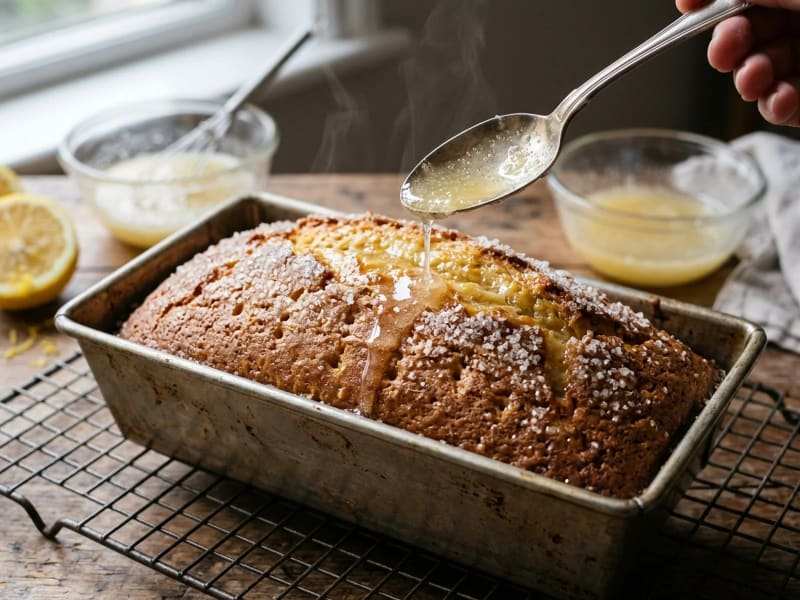 7. Leave the cake in the tin for 15 minutes, then lift it out with the parchment and leave it on a wire rack for at least another 30 minutes, until cool enough to slice. It will keep its shape better once fully cool.
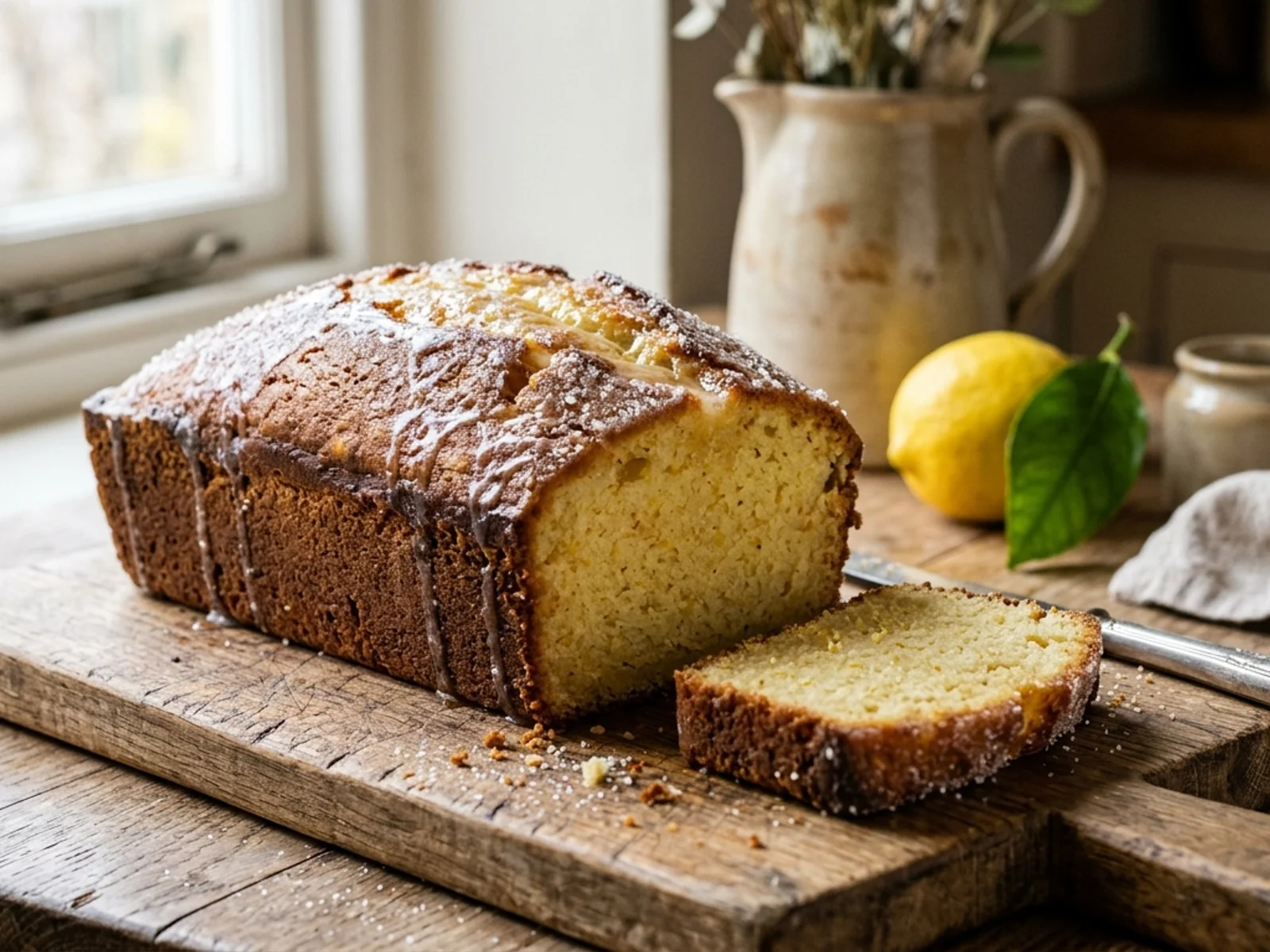
A soft, buttery lemon loaf is soaked with a tangy lemon and sugar drizzle while still warm. The result is a moist cake with a refreshing citrus flavour and a delicate sugary topping, lovely with a cup of tea.
- 900g (2 lb) loaf tin (approx. 23 × 13 × 7cm)
- Baking parchment paper (with overhang handles)
- Electric hand mixer or stand mixer
- Large mixing bowl
- Fine grater or microplane (for zesting unwaxed lemons)
- Citrus juicer
- Small bowl or jug (for mixing drizzle)
- Thin wooden skewer or cocktail stick
- Wire cooling rack
Adjust yield quantities or check items off as you prep.
- Heat the oven to 180°C (160°C fan/gas 4) and line a 2lb loaf tin with baking parchment.
- Rub the lemon zest into the caster sugar until pale yellow, then cream with the softened butter for 3–4 minutes until pale and fluffy.
- Beat in the eggs one at a time, each with a spoonful of flour, then fold in the rest of the flour and stir in the milk.
- Spread the batter into the tin and bake on the middle shelf for 45–55 minutes, until risen, golden and springy, with a skewer coming out clean.
- Stir the lemon juice and granulated sugar together without dissolving the sugar.
- As soon as the cake comes out, prick the top all over with a skewer and spoon the drizzle slowly over the hot cake.
- Leave in the tin for 15 minutes, then lift out and cool on a rack for at least another 30 minutes before slicing.
Tips for the Best Results
- Don't skip the minute of rubbing. Working the zest into the caster sugar with your fingertips bruises it open, so the oils spread through the whole bowl of sugar instead of sitting in small flecks.
- Soft butter, not melted. Butter straight from the fridge will not cream properly, but melted butter gives a dense cake. Leave the butter out for an hour or two before you start.
- Add the flour with the eggs. A spoonful of flour with each egg stops the butter and egg from separating, and the batter stays smooth and light.
- Use granulated sugar, raw. Caster sugar dissolves and gives a syrupy top rather than a crunchy one, and heating the lemon juice to dissolve the sugar does the same thing. Leave the drizzle grainy and pour it on hot.
- Prick deeply. A skewer pushed down to the base lets the lemon juice reach the whole cake, not just the top. If the drizzle starts to run off the sides, pause for a minute and let the first lot soak in.
- Judge by the skewer, not the clock. Ovens vary. Start checking at 45 minutes, and give it a few more minutes if the skewer still shows wet batter.
- Let it cool before slicing. A slice taken while the cake is still hot will crumble. 30 minutes on the rack lets the crumb settle.
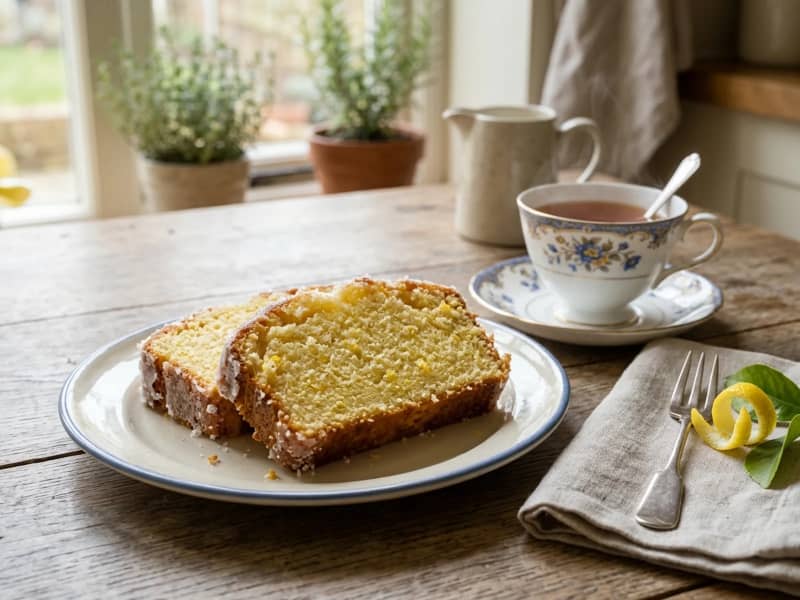
- Serving. The cake is best served plain, cut into thick slices with a cup of tea. It is also good with a spoonful of crème fraîche, Greek yoghurt or clotted cream, and a handful of fresh raspberries or blueberries.
How to Store and Freeze Lemon Drizzle Cake
- Cooling
- Leave the cake to cool fully on the wire rack before wrapping or boxing it, so the top does not go soft.
- Room temperature
- Kept in an airtight tin or container, this plain butter cake stays fresh for two to three days at room temperature. Several published recipes allow up to a week. Standard home food-safety guidance treats cakes without cream, custard or fresh fruit as safe to keep at ambient temperature in a sealed container.
- Fridge
- Chilling is not necessary. If you prefer to refrigerate the cake, bring slices back to room temperature before serving so the sponge is not dense from the cold.
- Freezing
- Freeze the whole cake, or individual slices, wrapped tightly in cling film and foil or in an airtight bag, with the freezer at around −18°C. Published recipes suggest two to three months. Freeze the cake before you add the drizzle if you can plan ahead, since the glaze can soften on thawing. The Food Standards Agency sets no time limit for the freezer.
- Defrosting
- Defrost in the fridge or at cool room temperature overnight. The FSA says to use defrosted food within 24 hours of it being fully defrosted.
- Where this applies
- This follows FSA guidance for England, Wales and Northern Ireland. Food Standards Scotland says defrosted food can be used within one to two days.
Substitutions and Variations
- Lemon and poppy seed
- stir 2 tsp of poppy seeds into the batter with the flour.
- Lemon and lavender
- stir ½ tsp of dried culinary lavender into the sugar when you rub the zest in.
- Lemon curd swirl
- warm 2 tbsp of lemon curd and ripple it through the batter in the tin with a knife before baking.
- Lemon icing instead of drizzle
- skip the drizzle. Once the cake is cool, mix 100g of icing sugar with 1 tbsp of lemon juice to a thick but pourable glaze, and spoon it over.
- Orange drizzle
- use the zest of two oranges and the juice of one, with the same amount of granulated sugar.
- Gluten-free
- use a 1:1 gluten-free self-raising flour blend. The cake may be a little denser.
- Dairy-free
- use a dairy-free baking block in place of the butter, and a plant-based milk in the batter.
Frequently Asked Questions
- Why has my cake sunk in the middle?
- A sunken middle usually comes from an oven that is a little too cool, a batter that is too wet, out-of-date raising agent or opening the oven door before the sponge has set. Use an oven thermometer if you suspect your oven, and leave the door closed until at least 40 minutes have gone by.
- Why is the top not crunchy?
- Dissolving the sugar in the juice gives a syrup rather than a crunchy drizzle, so stir only enough to mix. The drizzle also needs the cake to be hot, so pour it on as soon as the cake comes out of the oven.
- Why does my drizzle run off the sides?
- A skewer pushed only partway down leaves the drizzle sitting on top. Prick the cake deeply, and pour the drizzle on in two or three batches, giving each one a minute to soak in before adding the next.
- Can I use a 1lb loaf tin?
- Not with this amount of batter: a 1lb tin would overflow. Halve all the ingredients and use the same oven temperature, checking after about 30 minutes. For a traybake, double everything and bake it in a 30 × 23cm tin for 25–30 minutes.
- How much lemon zest should I use?
- Two unwaxed lemons is a good amount for a strong but not sharp flavour. Zest tastes much more strongly of lemon than juice does, so if your lemons are small, use three.




Reviews (0)