
Gammon Joint Cooking Time Calculator
Planning your gammon cooking time accurately ensures a tender, juicy joint that is properly cooked through. Whether you are estimating the oven cooking time for a gammon joint, cooking gammon in slow cooker with spiced cider, or using this gammon cooking calculator for a classic British boil-and-bake honey glaze, this tool helps you schedule every step.
Calculated timings are estimates. Always follow specific packaging or butcher instructions for your joint, and verify that the meat is steaming hot throughout before carving.
Total Cooking Time: 114 minutes
89 mins simmering on hob, followed by 25 mins glazing in oven.
Or 75°C held for 30s · Probe rather than judging cured pink colour
Step-by-Step Cooking Method
- Step 1 (Hob): Place gammon in a large stockpot with halved onion, carrot, celery, bay leaves, and peppercorns. Cover with cold water or cider. Bring to a gentle simmer and cook for 89 minutes.
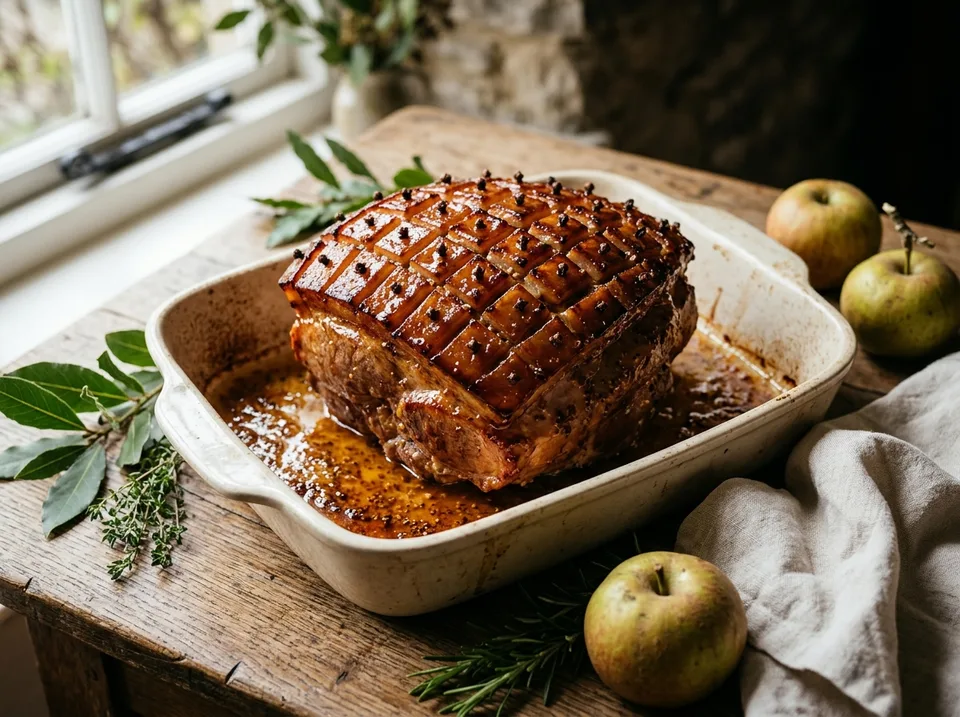
- Step 2 (Skinning & Scoring): Carefully lift the gammon out onto a board. Use a sharp knife to peel away the tough outer leathery skin, leaving an even layer of white fat underneath. Score the fat in a neat diamond pattern and stud the centre of each diamond with a whole clove.
- Step 3 (Glaze & Roast): Brush liberally with honey-mustard or marmalade glaze. Roast at 200°C (180°C fan / Gas Mark 6) for 25 minutes, basting halfway through, until sticky, golden, and deeply caramelized.
British Glaze Ideas
- Honey & Wholegrain Mustard Glaze: Mix 3 tbsp clear honey, 2 tbsp wholegrain mustard, 1 tbsp dark brown sugar, and 1 tsp English mustard powder.
- Sticky Marmalade & Orange Glaze: Warm 4 tbsp Seville orange marmalade with 1 tbsp Dijon mustard and a splash of fresh orange juice.
- Always baste the gammon halfway through the oven glazing stage for an even, glossy mahogany crust.
Soaking Advice: Soaking requirements vary by cure. Most modern UK supermarket vacuum-packed gammon joints do not require soaking, while some traditional butcher-cured or dry-cured joints may benefit from soaking. Always follow the specific butcher or product packaging instructions for your joint.
Target safe internal temperature: 70°C held for 2 minutes or 75°C held for 30 seconds (steaming hot throughout).
UK Gammon Joint Cooking Time Reference Table
Timings below show estimated gammon joint cooking time requirements for smoked and unsmoked joints using the classic British boil-and-roast method, simmering alone, or slow cooking:
| Joint Weight | Boil & Roast (Simmer) | Oven Glaze (200°C) | Boil Only (Simmer) | Slow Cooker (Low) |
|---|---|---|---|---|
| 1.0 kg (2.2 lb) | 45 mins | 25–30 mins | 65 mins | 6 hours |
| 1.5 kg (3.3 lb) | 65 mins | 25–30 mins | 85 mins | 6.5–7 hours |
| 2.0 kg (4.4 lb) | 90 mins | 25–30 mins | 110 mins | 7–8 hours |
| 2.5 kg (5.5 lb) | 110 mins | 25–30 mins | 130 mins | 8 hours |
Does My Gammon Need Soaking?
Soaking requirements depend entirely on the specific curing method used for your cut:
- Supermarket vacuum packs: Most standard UK supermarket gammon joints (e.g. Tesco, Sainsbury's, Waitrose, M&S, Asda) are mild wet-cured and do not require prior soaking.
- Traditional butcher & artisan cures: Traditional dry-cured joints may require soaking in cold water in the fridge to reduce saltiness. Always consult and follow the specific butcher or package instructions for your gammon.
The Secret to a Glossy Mahogany Glaze
When stripping away the leathery outer rind after simmering, take care to leave a generous 5mm layer of white fat intact over the meat.
Score this fat in a criss-cross diamond pattern with a sharp knife, taking care not to pierce the meat underneath. Stud each diamond intersection with a whole aromatic clove.
Brush with your glaze (such as honey and wholegrain mustard, or bitter Seville marmalade with a dash of Worcestershire sauce) and roast in a hot oven at 200°C (180°C fan) for 25 to 30 minutes, basting once halfway through until bubbling and deeply sticky.
Food Safety & Internal Temperature for Gammon
Gammon is raw cured pork leg and must be handled and cooked with the same care as fresh pork. According to UK Food Standards Agency guidelines, pork joints should reach an internal core temperature of at least 70°C held for 2 minutes or 75°C held for 30 seconds at the thickest part.
Note that cured meats often retain a naturally rosy pink colour even when fully cooked due to traditional curing salts (sodium nitrite). Rely on an accurate probe thermometer rather than meat colour alone: ensure the juices run clear and the joint is steaming hot throughout.