
Pork Loin Cooking Time Calculator
Working out the right pork loin cooking time is essential for getting blistered, crunchy crackling alongside juicy, tender meat. Whether you want to know how long to cook pork loin in oven, need an accurate pork loin roast calculator for Sunday dinner, or want a practical pork loin cooking calculator that factors in your oven type, our tool builds an estimated schedule by weight.
Calculated timings are estimates. Always follow pack instructions, ensure the whole joint is cooked through, and verify internal temperature using a calibrated food thermometer.
Total Cooking Time: 2 hrs 10 mins
Blast at 200°C Fan for 25 minutes to puff and blister the crackling, then drop oven to 160°C Fan for 105 minutes to gently roast the tender loin.
Or 75°C for 30s · Never cover crackling with foil when resting
Roasting Timeline
4 Rules for Perfectly Crisp Crackling
- Dry the rind thoroughly with kitchen paper. Ideally, leave uncovered in the fridge for a few hours before roasting.
- Score the skin across with a sharp Stanley knife or razor blade at 5mm intervals without slicing into the meat.
- Rub 1 tbsp of vegetable oil and plenty of coarse sea salt flakes right into the score lines immediately before cooking.
- Never cover hot crackling with foil during resting: trapped steam will soften the crisp skin into chewiness!
Internal Temperature Check: 70°C for 2 minutes (or 75°C for 30 seconds)
UK FSA Safe Standard: Pork must reach a verified core temperature of at least 70°C for 2 minutes (or 75°C for 30 seconds) throughout. While culinary references cite 68°C – 71°C, a temperature holding period must be directly measured and verified with a food thermometer rather than assumed from resting time alone. Ensure the whole joint is cooked through.
UK Roast Pork Loin Cooking Times Reference Table
Timings below assume an initial 25-minute crackling blast at 220°C (200°C fan / Gas Mark 7), followed by gentle through-cooking at 180°C (160°C fan / Gas Mark 4):
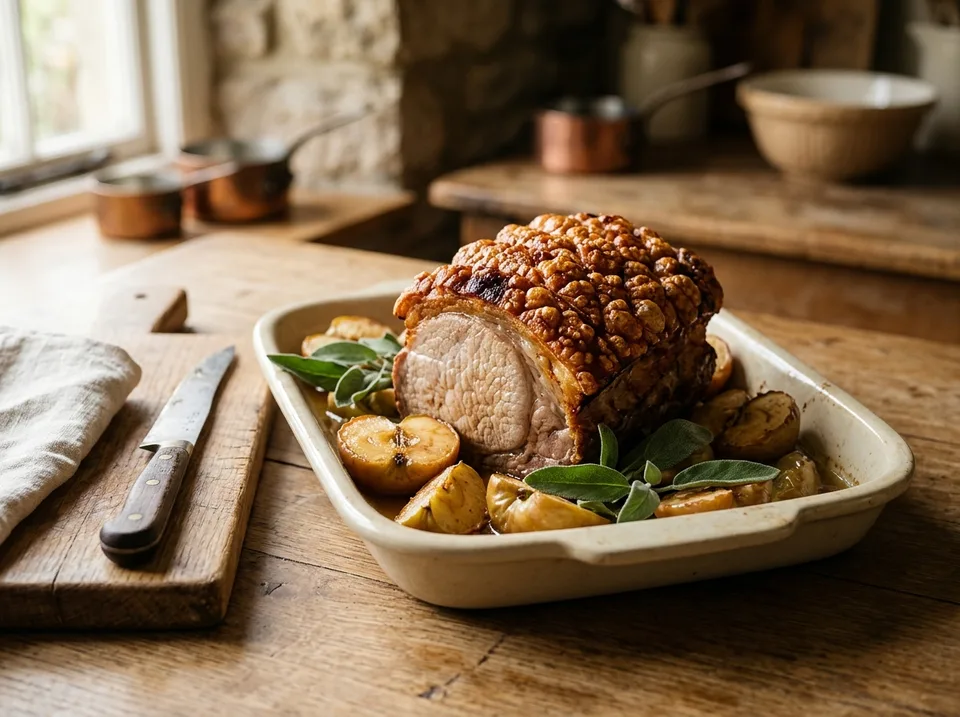
| Weight | Crackling Blast (200°C Fan) | Main Roast (160°C Fan) | Total Oven Time | Resting (Uncovered) |
|---|---|---|---|---|
| 1.0 kg (2.2 lb) | 25 mins | 45 mins | 70 mins (1 hr 10m) | 15 mins |
| 1.5 kg (3.3 lb) | 25 mins | 60 mins | 85 mins (1 hr 25m) | 15 mins |
| 2.0 kg (4.4 lb) | 25 mins | 75 mins | 100 mins (1 hr 40m) | 15–20 mins |
| 2.5 kg (5.5 lb) | 25 mins | 90 mins | 115 mins (1 hr 55m) | 20 mins |
The Science of Crispy Pork Crackling
1. Dry Rind is Crucial
Moisture is the enemy of crackling. Water turns into steam under heat, making the skin rubbery rather than crispy. Remove your pork from packaging, pat thoroughly dry with kitchen paper, and leave uncovered in the refrigerator on a plate for several hours (or overnight) before cooking.
2. Precision Scoring
Score the rind across into narrow 5mm strips using a sharp craft knife or clean Stanley blade. Cut through the hard skin into the white fat layer beneath, but never cut deep into the meat. Cutting into the meat allows savoury juices to bubble up onto the skin, preventing it from crisping.
3. Never Cover Crackling with Foil!
This is the most common mistake made by home cooks. While red meat roasts are tented in foil to retain heat while resting, covering roast pork traps rising steam directly against the hot crackling. Within minutes, crisp crackling turns chewy and tough. Rest your roast pork uncovered in a warm spot.
UK Pork Cooking Temperatures & Food Safety
Official UK Food Standards Agency (FSA) and Food Standards Scotland guidance specifies validated safe time-temperature combinations for pork: reaching an internal core temperature of 70°C held for 2 minutes (or 75°C held for 30 seconds) throughout the thickest part.
A temperature holding period must be directly measured and verified with a food thermometer, never assumed from resting time alone. Do not rely on an unverified assumption that resting after removing pork at 68°C will automatically achieve 70°C for 2 minutes. Ensure the whole joint is cooked through.
Important rule for rolled joints: If cooking a boneless rolled pork loin, the joint must be cooked thoroughly through to at least 70°C for 2 minutes with no pink flesh whatsoever, because external bacteria are rolled into the core of the meat during boning and tying.