
Baking Guides
Why Is My Cake Dry? Common Causes and Fixes
Find out why your cake turned dry, from overbaking and flour measurement to mixing, tin size and storage, plus practical ways to prevent it.
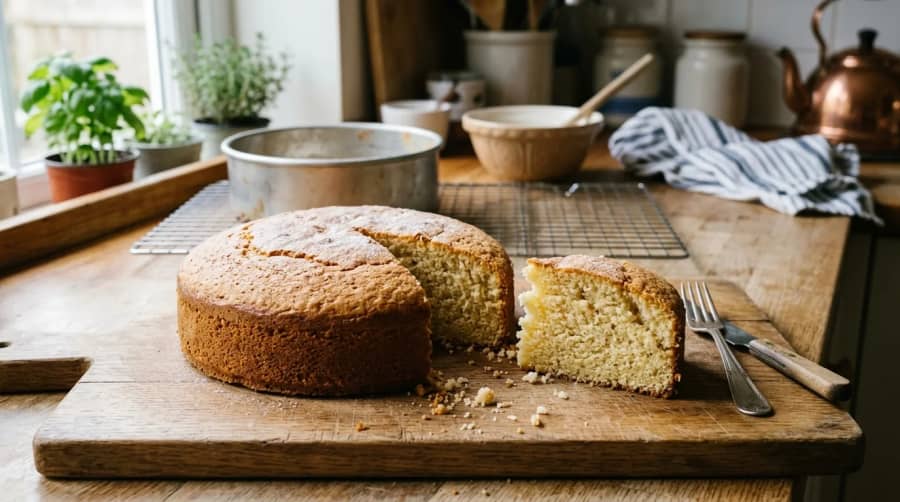
A dry cake does not always point to the same mistake.
One cake may crumble as soon as you cut it. Another may hold together but feel firm and tight. Sometimes only the edges are dry, while the centre is fine. In other cases, the cake was soft when it cooled and only became dry the next day.
Those differences matter because they give you clues about where to look first.
Start with what the cake actually looked and felt like
Before changing the recipe, think about the result you had.
| What you noticed | What is worth checking first |
|---|---|
| Dry throughout with a dark crust | Overbaking or an oven running hot |
| Dry and crumbly | Too much flour or an ingredient imbalance |
| Tight and firm rather than crumbly | Mixing method or excess flour |
| Dry edges with a softer centre | Tin size, shelf position or uneven heat |
| Soft at first but dry the next day | Storage or an exposed cut surface |
These are clues, not firm diagnoses.
A cake can have more than one problem at the same time. For example, a slightly hot oven and a tin that is larger than the recipe intended can both shorten the useful baking window.
Check the baking time first
Leaving a cake in the oven longer than it needs is one of the simplest ways to lose moisture.
A few signs can point in that direction:
- the crust became darker than expected
- the edges feel noticeably firm
- the cake has pulled well away from the sides of the tin
- the crumb feels dry all the way through rather than only at the edges
The time printed in a recipe is not a guarantee.
Your oven, the depth of the batter, the material of the tin and even the shelf position can affect how quickly the cake bakes.
If a reliable recipe says 35 minutes, that does not mean every kitchen will produce the same result at exactly 35 minutes.
Once a cake is approaching the expected baking time, use the signs of doneness given by the recipe rather than waiting blindly for the timer.
For a typical sponge, that might mean looking for a set centre, a light spring when gently pressed, or a skewer without wet batter where that test is appropriate.
The oven may be hotter than you think
A cake can also dry out even when you follow the stated baking time carefully.
If the oven is actually hotter than the temperature shown on its dial or display, the outside of the cake can set and colour sooner than expected.
Look for a pattern rather than judging from a single bake.
Useful clues include:
- cakes repeatedly browning earlier than expected
- edges becoming firm before the centre has properly set
- several reliable recipes finishing noticeably sooner in your oven
- one area of the cake colouring more quickly than another
A separate oven thermometer can be useful if this happens regularly. It gives you another point of comparison with the oven setting.
One unexpected result does not automatically mean the oven is inaccurate, though. Tin choice, shelf position and recipe differences can produce similar symptoms. If you're unsure whether your oven settings are causing excess surface heat or rapid moisture loss, our guide on Fan Oven vs Conventional Oven: What's the Difference? explains how each mode circulates heat and how to adjust temperatures.
Too much flour can make the crumb dry and crumbly
Flour affects both structure and moisture balance.
If more flour goes into the batter than the recipe was designed for, it can absorb more of the available liquid. The finished cake may feel dry, dense or crumbly.
This often happens through measurement rather than through an intentional recipe change.
For example:
- flour may be packed tightly into a measuring cup
- a cup measurement may be inaccurate
- extra flour may be added because the batter looks thinner than expected
- a different type of flour may be substituted without considering how it behaves
Where a recipe gives weights, using kitchen scales is usually the most consistent option. If you don't have digital scales to hand, our guide on how to measure flour without scales walks through spoon-and-level and volume methods to avoid over-packing.
If the flour is right, look at the ingredient balance
A cake recipe is a balance of flour, liquid, fat, sugar and other ingredients.
Changing one of them significantly can change the crumb even when the cake still rises.
For example, reducing fat may make the cake feel less tender. Cutting liquid can leave less moisture available in the batter. Reducing sugar heavily can also affect more than sweetness because sugar contributes to the texture and moisture retention of many cakes.
This does not mean a tiny adjustment automatically ruins a recipe.
The bigger risk comes from making substantial substitutions or reductions without replacing the role that ingredient was serving.
If you changed several ingredients at once, it can be difficult to tell which change caused the result. Making one adjustment at a time is much easier to evaluate.
Sometimes the cake feels dry because the crumb is too tight
Dryness and toughness can feel similar when you eat a cake, but they are not exactly the same problem.
Once flour has been added to many wheat-flour cake batters, prolonged or aggressive mixing can encourage more gluten development.
That can produce a firmer, tighter crumb.
The cake may not actually have lost an unusual amount of moisture, but the texture can still feel less soft and tender.
Look at the crumb.
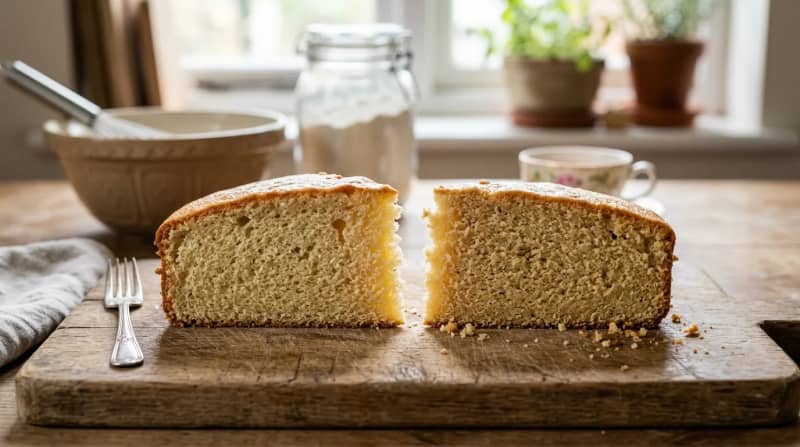
A genuinely dry cake may break apart easily and leave lots of loose crumbs.
An overworked cake can feel more elastic, firm or compact.
This distinction matters because baking for less time will not solve a mixing problem.
For cakes where the recipe tells you to fold in the flour gently or mix only until combined, that instruction is worth following.
Tin size can change the baking time without making it obvious
A larger cake tin spreads the same amount of batter into a thinner layer.
That thinner cake may bake sooner than the recipe expects.
If you still leave it in for the full original time, it can dry out even though every ingredient was measured correctly.
A smaller or deeper tin creates a different problem because the centre may need longer to set.
Tin material can make a difference too. Dark metal can encourage faster browning than a lighter surface, while very thin tins can respond quickly to changes in oven heat.
This is why replacing a specified tin with one that merely "looks close enough" sometimes changes the result more than expected. Before swapping cake tins, read our complete guide on how to convert a cake recipe for a different tin size to scale ingredient quantities and keep the batter at the intended depth.
Ingredient temperature matters when the method depends on it
Not every cake needs its ingredients at room temperature.
The method is what matters.
In a creaming-style cake, butter needs to be soft enough to beat smoothly with the sugar. Butter that is very hard and cold does not cream in the same way and may not trap air effectively.
Eggs added too quickly to a creamed mixture can also make the batter look curdled or split, especially when there is a large temperature difference between ingredients.
Trying to correct the texture by beating the batter for a long time after flour has been added can create a separate problem by making the crumb tougher.
The safest approach is to follow the ingredient-temperature instructions in the recipe rather than treating room temperature as a rule for every cake.
Was it dry from the oven, or did it dry out later?
This distinction can save you from changing a perfectly good recipe.
If the cake was soft once cooled but became firm later, storage deserves more attention than the baking method.
Cut cake dries particularly quickly because the exposed crumb loses moisture to the air.
For a plain sponge or similar cake that does not require refrigeration, an airtight container at room temperature can help protect the texture.
Once the cake has been sliced, keeping the cut surface covered also helps.
Refrigeration is different.
Cold storage can make some plain cakes feel firmer or drier, but cakes containing ingredients that require chilling still need to be stored safely in the fridge.
Examples can include cakes with fresh cream or other perishable fillings.
In those cases, food safety comes before keeping the crumb as soft as possible.
Work backwards from what happened
Instead of changing everything in the recipe, match the result to the most likely area.
It was dry as soon as it cooled
Check:
- baking time
- oven temperature
- flour quantity
- any major ingredient substitutions
The edges were dry but the centre was still soft
Look at:
- tin size
- shelf position
- how strongly the sides of the tin conduct heat
- whether the outside coloured much earlier than the centre
The crumb was firm and tight rather than crumbly
Check:
- how long the batter was mixed after adding flour
- whether too much flour went in
- whether the recipe's mixing method was followed
It was soft on day one but dry later
Check:
- whether it was stored airtight
- whether a cut surface was left exposed
- whether it was refrigerated unnecessarily
This approach is usually more useful than assuming every dry cake simply needed more liquid.
Can you still use a dry cake?
Often, yes.
The best rescue depends on the type of cake.
A fairly plain sponge can be served with custard, cream or fruit so each mouthful has more moisture.
A light brushing of a suitable syrup can help certain sponge cakes, but it should be used with restraint. Too much can leave the outside wet while the centre still has the same dry texture.
A dry sponge can also work well in a layered dessert where custard, fruit or cream provides moisture.
If the cake is only slightly firm, a suitable filling or frosting may be enough to make it enjoyable.
The aim is not to hide a badly burnt or unsafe cake. It is simply to make good use of a cake whose texture turned out a little drier than intended.
Fix the cause rather than changing the whole recipe
Before adding extra milk, butter or sugar next time, work through the simpler possibilities.
Check the baking time and oven behaviour first. Then look at ingredient measurements, mixing, tin size and storage.
Usually, the texture itself gives you useful clues.
A dark, dry cake tells a different story from a pale cake with a tight crumb, and a cake that dries out overnight is a different problem again.
Finding that difference is what helps you make the right change on the next bake.
Useful Tools for this Guide
- Use Tool: Cake Tin Conversion Calculator
Cake Tin Conversion Calculator
Resize cake recipes for different round, square, loaf and rectangular tins in cm or inches.