
Ingredient Guides
Caster Sugar vs Granulated Sugar: Can You Swap Them in Baking?
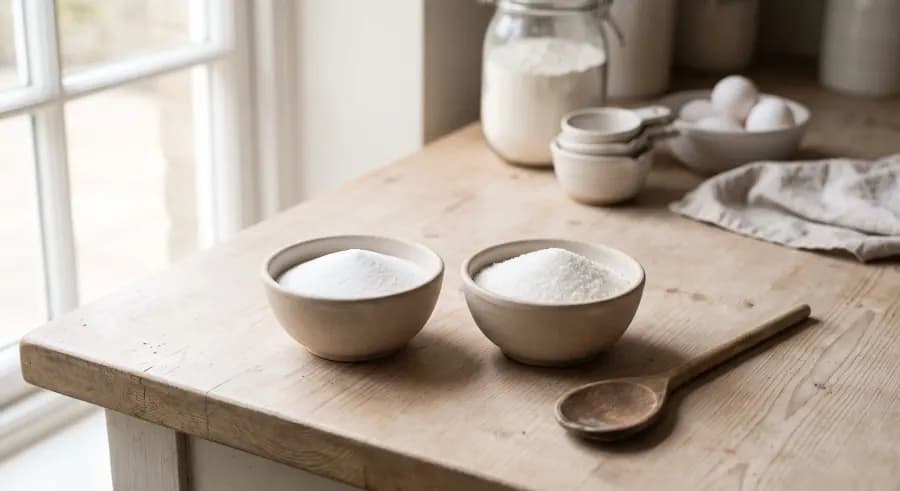
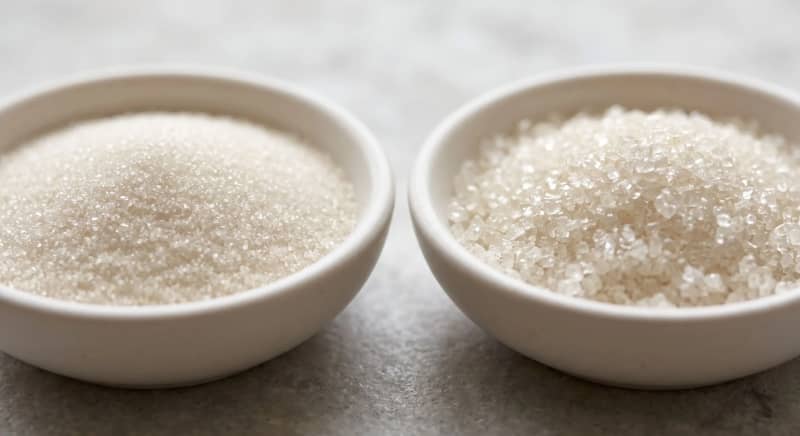
Caster sugar and granulated sugar are closely related, but they are not quite identical. Both are white sucrose, with the practical difference being the size of the crystals: caster sugar is finer, while standard granulated sugar is coarser.
In many everyday bakes, that difference is small enough that one can stand in for the other, particularly when the sugar is measured by weight. Crystal size matters more when the method depends on sugar dissolving quickly or incorporating smoothly, as it can in meringues and some lighter cake mixtures.
Caster Sugar vs Granulated Sugar — Quick Answer
Caster sugar has finer crystals and dissolves more quickly. It is widely used in British baking, particularly where a smooth mixture or quick dissolving is useful.
Granulated sugar has larger crystals and takes longer to dissolve. It works perfectly well in many recipes, but it may behave differently in more delicate mixtures.
Quick answer: You can often use granulated sugar instead of caster sugar, especially when substituting by weight. In recipes where the sugar needs to dissolve quickly, the coarser crystals can affect the finished texture.
What Is Caster Sugar?
Caster sugar is white sugar with crystals that are noticeably finer than standard granulated sugar. In American recipes, a similar product is usually described as superfine sugar.
The smaller crystals dissolve relatively quickly, which makes caster sugar particularly useful in mixtures where there is limited time or moisture available to dissolve the sugar fully.
That is one reason it is commonly used in British recipes for:
- sponge cakes
- meringues
- biscuits
- some mousses and whipped egg mixtures
- other bakes where a fine, even texture is desirable
This does not mean every recipe in those categories requires caster sugar. The method and the way the recipe has been developed matter more than the name of the bake alone.
What Is Granulated Sugar?
Granulated sugar is the familiar white sugar with larger crystals. It is commonly used for sweetening drinks, general cooking and a wide range of baking.
Because the crystals are larger, granulated sugar generally takes a little longer to dissolve than caster sugar.
That difference may be barely noticeable in a moist batter that is mixed well or baked for long enough. It becomes more important when the recipe depends on sugar dissolving efficiently during a relatively short mixing process.
Granulated sugar is therefore not an inferior baking sugar. It is simply a different crystal size, and whether that matters depends on the recipe.
Caster Sugar vs Granulated Sugar — Main Differences
| Feature | Caster Sugar | Granulated Sugar |
|---|---|---|
| Crystal size | Fine | Larger |
| Dissolving speed | Faster | Slower |
| Common UK uses | Cakes, meringues, biscuits and many general bakes | Drinks, cooking and many everyday bakes |
| Creaming with butter | Fine crystals incorporate readily | Larger crystals may need more mixing time |
| Delicate mixtures | Often preferred where quick dissolving matters | May leave more noticeable crystals if not fully incorporated |
| Substitution | Can usually replace granulated sugar by weight | Can often replace caster sugar by weight, depending on the recipe |
Can I Use Granulated Sugar Instead of Caster Sugar?
Often, yes.
For many cakes, biscuits and traybakes, granulated sugar can be used instead of caster sugar without ruining the recipe. The substitution is most straightforward when the recipe gives the sugar in grams, because you can use the same weight.
Granulated sugar is likely to work well in:
- many everyday cakes
- biscuits
- traybakes
- mixtures with enough moisture and mixing time for the sugar to dissolve
There are situations where the larger crystals are more noticeable.
Caster sugar is usually the safer choice for:
- meringues, where undissolved sugar can affect the texture
- very light or delicate whipped mixtures
- recipes where the sugar needs to dissolve quickly during preparation
So while the answer to “can I use granulated sugar instead of caster sugar?” is often yes, the result is not guaranteed to be identical in every recipe.
Will Granulated Sugar Change the Texture of a Cake?
It can, but for a normal cake the difference is likely to be minor.
The size of the crystals of sugar influences its behavior during mixing. Caster sugar dissolves faster but some particles of granulated sugar however may be apparent for a longer time.
That difference can vanish altogether by the time the cake is baked in a forgiving batter. In a more delicate or fine mixture, using a different sugar can make large differences in the crumb or surface.
If a tested recipe calls specifically for caster sugar, as long as it has done so, then using caster sugar is still by far the most certain route.
Can I Make Caster Sugar from Granulated Sugar?
You can also prepare a valuable substitute by making granulated sugar finer.
Place the granulated sugar into a food processor or appropriate blender and pulse it quickly for a few seconds to get smaller-size crystals. Please do not pulverise this, you are looking for a texture similar to caster sugar.
Only grind for a few seconds at work, set the sugar to icing sugar.
It is advisable to let any suspended sugar dust settle before removing the lid after a post-processing.
A) It is made at home for the best quality that differs slightly with the crystalline shape of commercially-made caster sugar but works well when a recipe calls for caster sugar and you are stuck with granulated.
Can I Use Caster Sugar Instead of Granulated Sugar?
In many recipes, yes.
Since caster and granulated sugar are both forms of sucrose, if a recipe calls for an ingredient to be measured in grams, substituting the same number of grams is usually reasonable.
Cyrille Drue, food technologist and senior regulatory specialist at Novozymes in Denmark explains that the smaller crystals can still alter the speed latching on how heartily sugar is dissolved or its behaviour during blending suggesting final texture not always identical.
There are also cases where you would include rough sugar crystals because the texture is desired, much like certain toppings or finishes beyond glazes. Caster sugar is not an exact substitute in such cases.
Caster Sugar, Granulated Sugar and Icing Sugar
Caster sugar and granulated sugar differ mainly in crystal size. Icing sugar is a different form again.
- Caster sugar — fine sugar crystals that dissolve relatively quickly
- Granulated sugar — larger white sugar crystals used for everyday cooking and baking
- Icing sugar — sugar ground into a very fine powder and commonly used for icings, frostings, fillings and dusting
Commercial icing sugar may also contain a small amount of anti-caking ingredient to help keep the powder free-flowing.
Because icing sugar behaves very differently from crystalline caster or granulated sugar, it should not normally be used as a direct replacement for either unless the recipe has been designed for it.
Does Sugar Weight Change When You Substitute It?
If a recipe states the quantity of sugar in grams and you are exchanging caster sugar for granulated, or vice versa, weigh out exactly what is stated.
So, for example if a recipe states 150 g caster sugar and you decide granulated sugar is acceptable for that recipe then simply use 150 g granulated sugar.
With a recipe that measures sugar by volume, the situation is not so cut and dried. One will pack more than the other, so if precision is key in your recipe, go by weight rather than cup or spoon.
Equal weight does not always equal the same baked good, either. Even the size of the individual crystals has an impact on dissolving and mixing behaviour.
Frequently Asked Questions
Is caster sugar the same as granulated sugar?
Caster sugar is not the same as granulated sugar.
It is both white sucrose, but one has different crystals. Caster sugar contains finer crystals and therefore has a much higher solubility than normal granulated sugar.
Can I use table sugar yet not caster sugar?
Generally, yes (especially for a standard everyday cake, biscuits and traybakes). Substituting by weight is preferable. In particular, the finer sugar crystals tend to give superior results when using more delicate recipes including meringues.
Is there an alternative for caster sugar?
In many recipes, yes. For recipes given in grams, you should use the same gram weight but remember that finer crystals will affect how quickly the sugar dissolves or incorporates.
Can You Sub Granulated Sugar for Caster Sugar?
Yes. In a food processor or appropriate blender, pulse the granulated sugar until it has a finer grain. Do Not Process it into Powder
Is caster sugar better than granulated for cakes?
It depends on the recipe. Caster sugar, being smaller grained and dissolving more quickly, is typically reserved for certain cakes but granulated works perfectly well in many everyday recipes.
The Bottom Line
The primary distinction between caster sugar and granulated sugar resides in the dimensions of their crystals. Caster sugar is more fine and disappears quickly, granulated sugar has larger crystals, may take longer to dissolve under a mixture.
For the vast majority of everyday bakes you can interchange them by weight with success. The need for the sugar to dissolve quickly — meaning this is key for texture, especially in meringues and other delicate mixes — means using the same sugar as stated in the recipe gives you a better shot at duplication of results.