
Breakfast
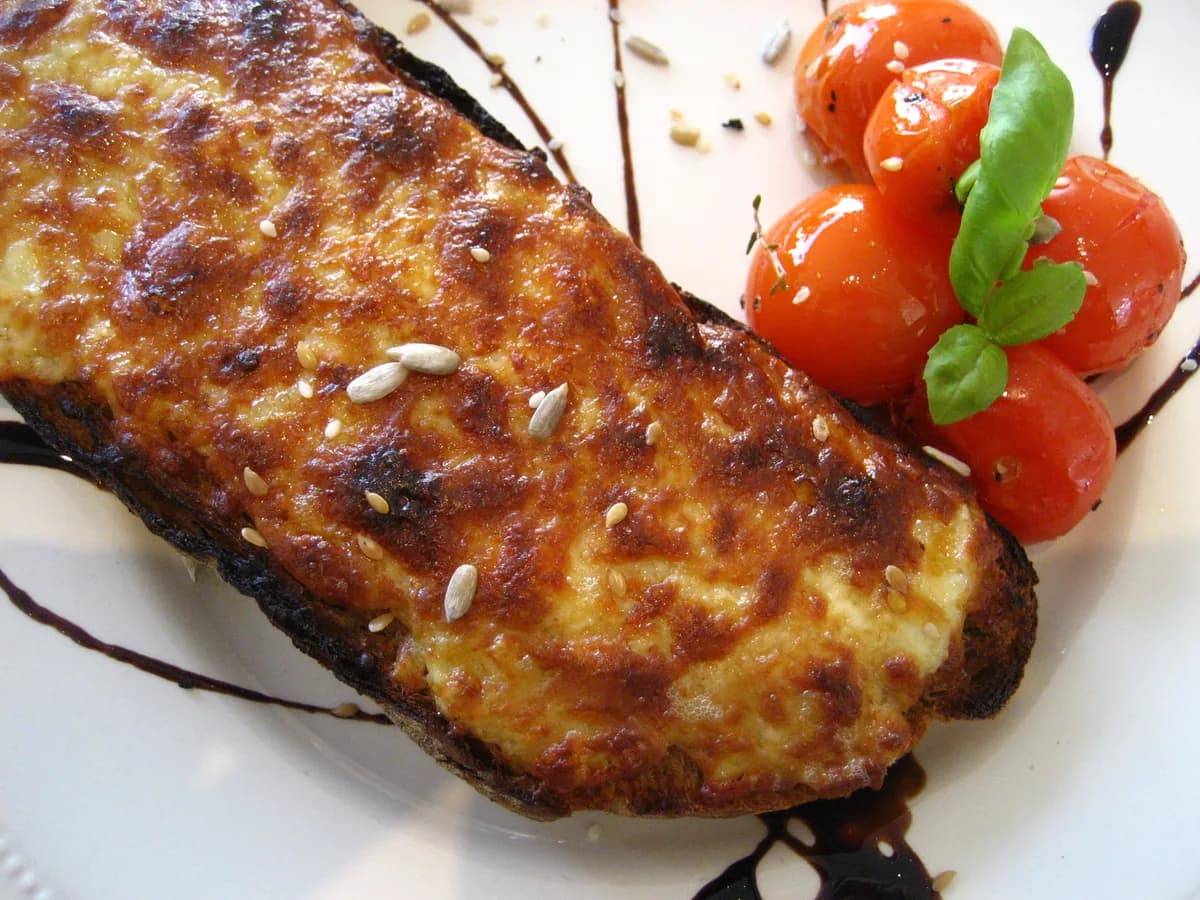
Classic Welsh Rarebit with Cheddar and Mustard
- Prep
- 10 min
- Cook
- 10 min
- Total
- 20 min
- Serves
- 4
Introduction
Welsh rarebit is a hot cheese sauce — mature Cheddar, mustard and Worcestershire whisked into a short milk roux — spooned onto toasted bread and blistered under the grill. It is thicker than melted cheese on toast and sharper in flavour, with the mustard and Worcestershire doing as much work as the cheese. For weight conversions, use Grams to Ounces Converter UK. To estimate ingredient costs, use Recipe Cost Calculator UK.
The dish turns up in Hannah Glasse's The Art of Cookery Made Plain and Easy in 1747 under the older name "Welsh rabbit"; "rarebit" is a later, politer spelling that stuck in the nineteenth century. There is no rabbit in either version. In Welsh cookery the related dish caws pobi (baked cheese) is documented from the sixteenth century.
Allow about twenty minutes from start to table: ten to make the sauce and ten to toast and grill. The quantities below feed four as a light meal or two as a hungry lunch.
Related recipes
 Classic Ham and Cheese OmeletteA classic ham and cheese omelette needs little more than eggs, cooked ham and melting cheese. Keeping the pan over medium-low heat helps the eggs stay soft and tender while the filling warms through.
 Easy Kedgeree Recipe – Classic British BreakfastA classic British kedgeree with smoked haddock, fluffy rice, boiled eggs and gentle curry spices for a hearty breakfast or brunch.
What You'll Need
Ingredients
- 4 thick slices of sturdy white or wholemeal bread (about 2cm thick)
- 200g mature or extra-mature Cheddar cheese, coarsely grated
- 15g unsalted butter
- 1 tbsp plain white flour (about 10g)
- 75ml whole milk
- 1 tsp Worcestershire sauce
- 1 tsp English mustard, or 1½ tsp Dijon mustard for a milder note
- A pinch of cayenne pepper or ground white pepper
- A pinch of fine sea salt
The cheese is the recipe's backbone, so a mature or extra-mature block Cheddar, aged at least nine months, pays back the small extra cost: it melts without turning to oil and gives the sauce its sharp edge. Pre-grated bagged cheese is coated in anti-caking starch that stops it melting smoothly, so grate from a block yourself and coarsely rather than finely — fine shreds clump before the sauce catches them. Lancashire, Cheshire and mature Double Gloucester all work in Cheddar's place and give a slightly different flavour.
The bread needs to carry a wet, hot topping without going limp. A thick slice of a plain white tin loaf, a sourdough or a sturdy wholemeal loaf is right; thin sliced bread, brioche or anything very open-crumbed collapses under the sauce. English mustard (Colman's, Keen's) brings sharp heat; Dijon is milder and smoother, and French's American yellow mustard is milder still and tastes different. Worcestershire sauce contains anchovies and so is not vegetarian; look for a vegetarian version or the "no anchovies" variant if that matters at your table.

How to Make Classic Welsh Rarebit with Cheddar and Mustard
Make the Sauce, Grill the Toast
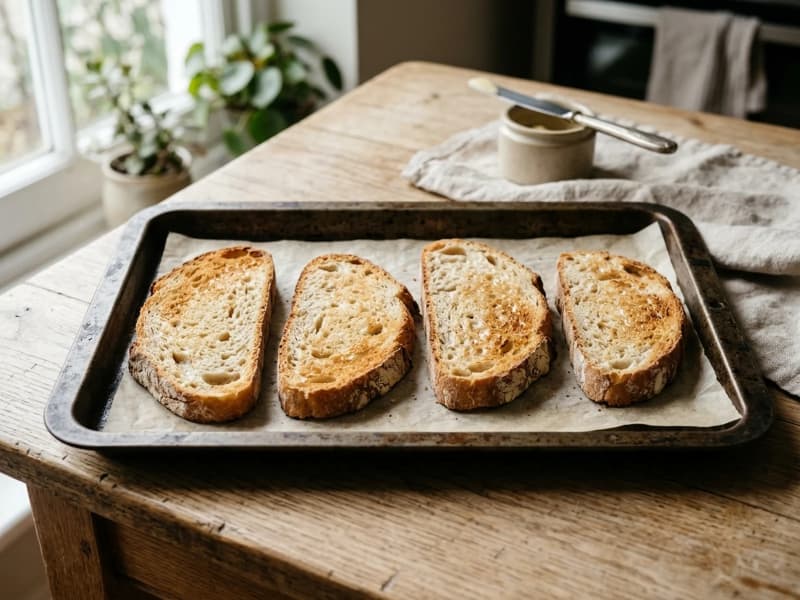
- Set the grill to its hottest setting and put a shelf about 10cm below the element so the tops of the slices sit close to the heat. Toast the bread, either in a toaster or on both sides under the grill, until it is golden and the inside is dry rather than fluffy. Leave the slices on a baking tray.
 2. Melt the butter in a small, heavy-bottomed saucepan over a low to medium heat. When it is foaming but not browning, scatter in the plain flour and whisk at once. Keep whisking for about a minute, until the mixture smells like warm biscuit and looks a pale beige rather than raw-floury white. This is the roux.
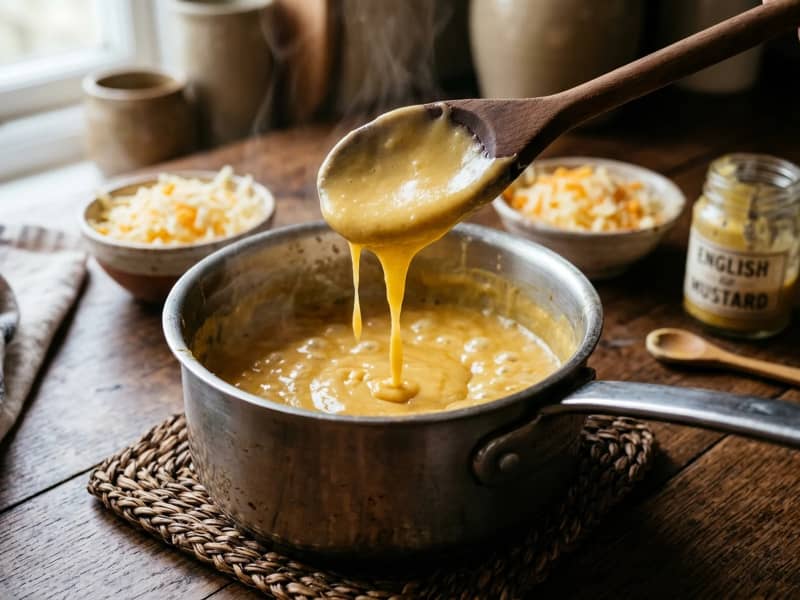
3. Pour in the whole milk in two or three additions, whisking hard between each one. The sauce goes from a lumpy paste to a glossy, pouring custard. Let it bubble gently for a minute to cook the flour, then slide the pan off the heat. Taking it off the heat is the single most important move in this recipe: Cheddar is a cow's-milk cheese and splits into a greasy, grainy mess when it is pushed above a hard simmer.
- With the pan off the heat, add the grated Cheddar in two handfuls, stirring with a wooden spoon between each one until the cheese has melted into the sauce. Stir in the Worcestershire sauce, the mustard, the cayenne or white pepper and the pinch of salt. The sauce should coat the back of a spoon thickly and pull cleanly away from the pan sides. If it looks loose, let it stand for a minute while the starch catches up; if it looks too stiff, loosen with a teaspoon more milk.
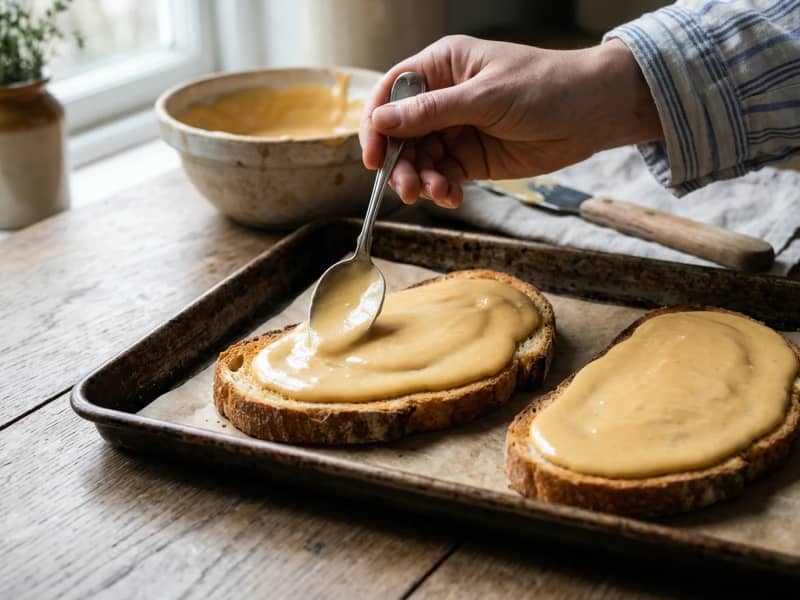
 5. Spoon the sauce generously over the toasted bread, spreading it right to the edges so the crusts do not scorch. Slide the tray under the grill, about 10cm from the element. Grill for 2–4 minutes, watching the whole time: the surface bubbles, turns deep golden with dark brown spots, and smells sharp. Lift the tray out as soon as the darker spots appear — the gap between golden and burnt is seconds.
 6. Serve straight away, while the top is still blistered and the toast underneath is crisp. Welsh rarebit holds its texture for about five minutes; after that the toast starts to steam from the hot sauce and softens from underneath.
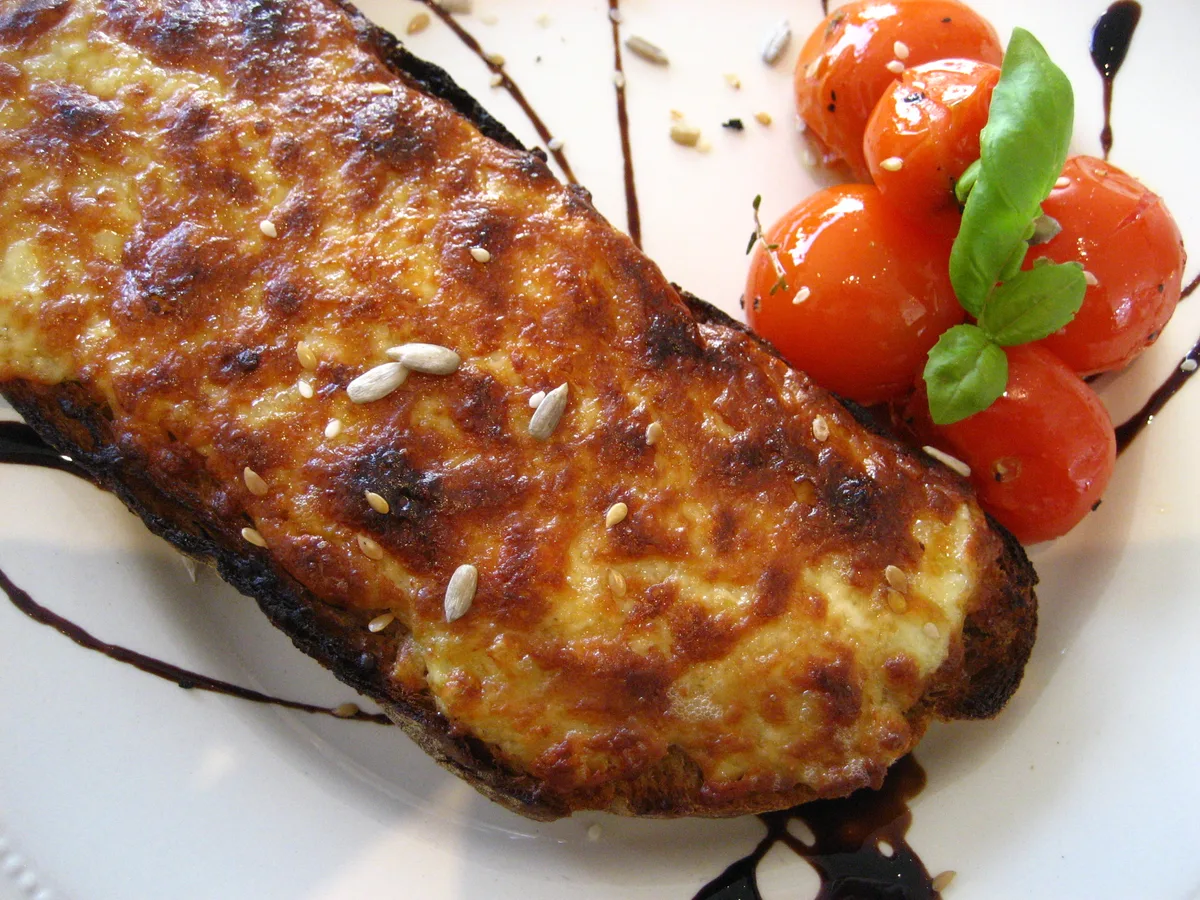
Crisp toasted bread is topped with a rich, savoury mixture of mature Cheddar and mustard, then grilled until golden and bubbling. Welsh rarebit is a traditional British favourite that's ideal for a leisurely breakfast, brunch or light lunch.
- Small heavy-based saucepan
- Wooden spoon or heatproof spatula
- Coarse box grater
- Oven grill or overhead grill
- Baking tray or grill pan lined with aluminium foil
- Palette knife or table knife (for spreading)
Adjust yield quantities or check items off as you prep.
- Set the grill to its hottest setting and put a shelf about 10cm below the element so the tops of the slices sit close to the heat. Toast the bread, either in a toaster or on both sides under the grill, until it is golden and the inside is dry rather than fluffy. Leave the slices on a baking tray.
- Melt the butter in a small, heavy-bottomed saucepan over a low to medium heat. When it is foaming but not browning, scatter in the plain flour and whisk at once. Keep whisking for about a minute, until the mixture smells like warm biscuit and looks a pale beige rather than raw-floury white. This is the roux.
- Pour in the whole milk in two or three additions, whisking hard between each one. The sauce goes from a lumpy paste to a glossy, pouring custard. Let it bubble gently for a minute to cook the flour, then slide the pan off the heat. Taking it off the heat is the single most important move in this recipe: Cheddar is a cow's-milk cheese and splits into a greasy, grainy mess when it is pushed above a hard simmer.
- With the pan off the heat, add the grated Cheddar in two handfuls, stirring with a wooden spoon between each one until the cheese has melted into the sauce. Stir in the Worcestershire sauce, the mustard, the cayenne or white pepper and the pinch of salt. The sauce should coat the back of a spoon thickly and pull cleanly away from the pan sides. If it looks loose, let it stand for a minute while the starch catches up; if it looks too stiff, loosen with a teaspoon more milk.
- Spoon the sauce generously over the toasted bread, spreading it right to the edges so the crusts do not scorch. Slide the tray under the grill, about 10cm from the element. Grill for 2–4 minutes, watching the whole time: the surface bubbles, turns deep golden with dark brown spots, and smells sharp. Lift the tray out as soon as the darker spots appear — the gap between golden and burnt is seconds.
- Serve straight away, while the top is still blistered and the toast underneath is crisp. Welsh rarebit holds its texture for about five minutes; after that the toast starts to steam from the hot sauce and softens from underneath.
How to Reheat Classic Welsh Rarebit with Cheddar and Mustard
Welsh rarebit does not sit well. The toast softens as the sauce cools and the cheese separates on reheating, so cook what you plan to eat.
For leftover slices, warm them under a hot grill — not in a microwave, which drives the cheese into a greasy puddle. Place the slice on a baking tray about 10cm from the element and grill for 1–2 minutes until the top is bubbling again and the base is hot. The sauce will be a little flatter in texture than the first time, and the toast will not be as crisp, so this is a rescue rather than a restoration.
Sauce made ahead is a better approach than finished rarebit kept warm. The sauce can be made up to an hour ahead and kept covered in a warm, dry corner of the kitchen; stir in a splash of milk and warm it very gently on the hob before spooning it on freshly toasted bread.
Toppings and Variations
- Buck rarebit
- Top each grilled slice with a soft poached egg. This is the eighteenth-century "buck rabbit" and turns a brunch slice into a proper plate.
- Blushing bunny
- Serve the rarebit with a warm halved tomato grilled alongside, or lay a slice of tomato on the toast before you spoon the sauce over. The eighteenth-century name again; the tomato cuts the richness.
- Ale rarebit
- Replace 50ml of the milk with the same amount of a dark British ale, stout or porter. Whisk the ale in with the milk at the roux stage. The result is darker in colour, maltier in taste, and closer to the pub version of the dish. Avoid lager; it is too thin to add anything.
- Vegetarian version
- Many British Worcestershire sauces contain anchovies. Use a vegetarian Worcestershire (Henderson's Relish, which is from Sheffield rather than Worcester, is a drop-in substitute with the same depth) or a vegetarian-marked version from a major brand.
- Lower salt
- English mustard is already salty and Worcestershire sauce is saltier still. If you are watching salt, leave out the pinch of added salt and use a reduced-salt mature Cheddar.
- Soldiers
- Cut each grilled slice into thick fingers and serve as warm cheese soldiers, with a soft-boiled egg to dip them in.
- Cheese swap
- Try half mature Cheddar and half Red Leicester for a bright orange top, or half Cheddar and half Lancashire Bomb for extra tang.
Tips for the Best Results
- Keep the heat under the cheese low
- The one habit that separates a smooth, glossy rarebit from a grainy, oily one is adding the cheese off the heat. Cheddar seizes above about 82°C; a milk-based sauce held at a slow simmer gets there in seconds. Take the pan off the hob the moment the roux has cooked out and let the residual heat melt the cheese.
- Grate coarsely
- Coarse shreds melt into the sauce in neat waves. Fine shreds clump before the sauce has time to catch them, and bagged pre-grated cheese is coated in starch that prevents a smooth melt.
- Use thick, dry toast
- A thin, soft slice turns to pap under the hot topping. A thick slice from a sturdy loaf, toasted until the inside is dry rather than fluffy, holds its structure. If the loaf is a day old, so much the better.
- Watch the grill like a hawk
- The gap between golden and black is seconds, not minutes. Stay at the oven door with the grill light on. If the cheese is bubbling and the top is still pale, slide the shelf one notch closer to the element.
- Season through the sauce, not on top
- Mustard, Worcestershire, salt and pepper go into the sauce where they can disperse evenly. Sprinkling salt on finished rarebit tastes patchy.
- A splash of ale changes the character
- If you want the deeper, maltier flavour of pub-style rarebit, swap part of the milk for a dark ale as in Toppings and Variations. The classic milk-only version is lighter and lets the Cheddar carry the whole dish.
- Eat it hot
- This is one of those dishes where a few minutes on the plate are the difference between crisp and soft. Grill, plate, serve.
Frequently Asked Questions
- Why did my sauce turn grainy and oily?
- The cheese was heated too hot. Cheddar's milk proteins coagulate and squeeze out the fat when the sauce gets much above a slow simmer, which is why this recipe takes the pan off the heat before the cheese goes in. If it has already split, pull the pan off the heat at once, add a tablespoon of cold milk and whisk fast — the drop in temperature sometimes brings the sauce back. If it does not, the sauce is still edible, just texturally rougher than it should be.
- Can I make Welsh rarebit without a roux?
- Yes. The quickest no-roux route is to whisk 1 beaten egg into the hot milk, melt the butter into it and then stir in the cheese off the heat. The egg thickens the sauce in place of the flour and gives a slightly looser, custardier topping. Keep the heat gentle so the egg does not scramble.
- Is Welsh rarebit the same as cheese on toast?
- No. Cheese on toast is sliced or grated cheese grilled directly on bread until it melts and bubbles. Welsh rarebit is a cooked, seasoned sauce — milk, butter, flour, cheese, mustard, Worcestershire — spread on toast and then grilled. The sauce step is what gives it the thicker body and the sharper taste.
- Can I leave out the Worcestershire sauce?
- You can, but something is lost. Worcestershire supplies the dish's umami savouriness; without it the rarebit tastes mostly of cheese and mustard. For a direct substitute, use the same quantity of vegetarian Worcestershire, Henderson's Relish, or a mix of soy sauce and a few drops of malt vinegar. For a cleaner, Worcestershire-free version, add an extra half-teaspoon of English mustard and a splash of balsamic or sherry vinegar for depth.
- What goes with Welsh rarebit?
- At breakfast or brunch, serve it with grilled tomatoes, a soft poached egg (buck rarebit), crispy streaky bacon or a watercress salad. For lunch or supper, a crisp green salad with a sharp vinaigrette cuts the richness, as does a bowl of soup — leek and potato, or a thin tomato broth, both work well. A pickled onion or a spoonful of chutney on the side is traditional in Welsh pubs.
- Can I prepare Welsh rarebit ahead?
- The sauce can be made up to an hour ahead and kept warm in the pan, covered, off the heat. Rewarm it very gently with a splash of milk, then spread on freshly toasted bread and grill. Spreading cold sauce onto toast and grilling it is possible but the result is less airy; the hot sauce catches more quickly under the grill.
- Why is it called Welsh rabbit if there is no rabbit?
- "Welsh rabbit" is the older eighteenth-century name, recorded in Hannah Glasse's 1747 cookbook; "Welsh rarebit" is a later nineteenth-century rewriting of the same name. One early theory held that the "Welsh" part was mock-affectionate, referring to a cheese dish where English diners might have expected game, but historians disagree, and the name's origin is still unsettled. There is no rabbit in either spelling.

Reviews (0)