
Soups
Creamy Roasted Butternut Squash Soup

- Prep
- 20 min
- Cook
- 55 min
- Total
- 1 hr 25 min
- Serves
- 4
Introduction
Roasting does most of the work in this soup. The squash cooks on a hot tray until its edges turn golden, then it is simmered briefly with onion, garlic, ginger and a little cinnamon, and blended with vegetable stock. Blended squash gives the soup its body, so cream is an optional finish rather than a necessity. To estimate ingredient costs, use Recipe Cost Calculator UK. To adjust ingredient quantities for a different number of portions, use Recipe Scaling Calculator. For related guidance, read Fan Oven vs Conventional Oven: What's the Difference?.
Allow about 85 minutes in all: 20 to prepare, 55 to cook (much of it hands-off while the squash roasts) and 10 for the soup to cool a little before it goes into a jug blender. It serves four.
Related recipes
 Easy Broccoli and Stilton Soup RecipeA rich and creamy broccoli and Stilton soup with classic British flavour, easy to make for a warming lunch or light dinner.
 Chicken and Sweetcorn SoupThis chicken and sweet corn soup combines tender shredded chicken, sweet corn and soft egg ribbons in a lightly thickened broth flavoured with ginger, garlic, soy sauce and sesame oil.
Ingredients
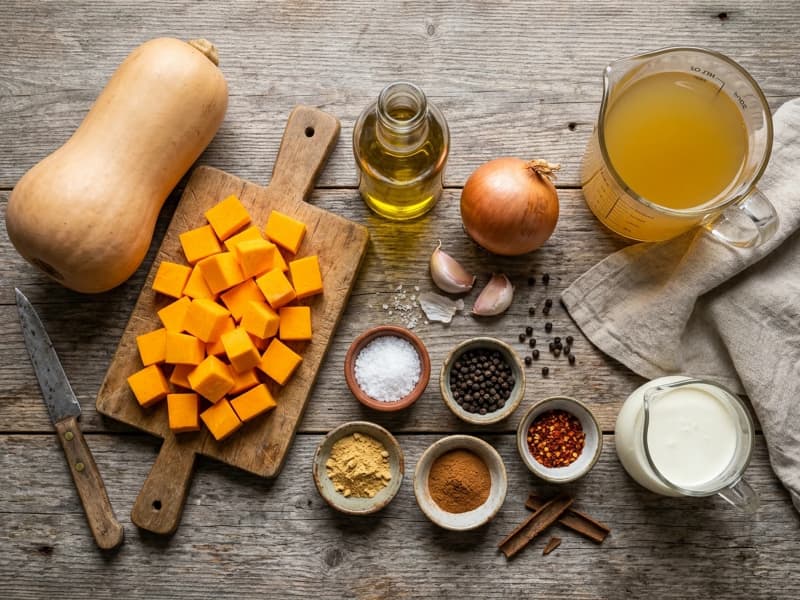
- 1 large butternut squash (1.2–1.4kg), peeled, deseeded and cut into 3cm chunks (about 750g prepared)
- 3 tbsp olive oil, divided: 2 tbsp for roasting and 1 tbsp for the onion
- ½ tsp fine sea salt, plus more to taste
- Freshly ground black pepper
- 1 medium brown onion, roughly chopped
- 2 garlic cloves, roughly chopped
- 1 tsp ground ginger
- ½ tsp ground cinnamon
- A pinch of cayenne pepper or chilli flakes (optional)
- 850ml good-quality vegetable stock
- 2–3 tbsp double cream or coconut cream (optional)
Choose a squash with firm, matte skin and no soft patches. One with a long neck gives more flesh and fewer seeds. The stock quantity makes a soup of medium thickness, and step 8 shows how to thin or thicken it. Check the stock label if the soup needs to be vegetarian or vegan.
How to Make Creamy Roasted Butternut Squash Soup
Build the Base
- Heat the oven to 200°C (180°C fan/gas 6) and line a large roasting tray with baking parchment.
- Prepare the squash on a steady board; a damp cloth underneath stops it slipping. Cut off the top and bottom, cut the squash in two where the neck meets the bulb, and peel both pieces with a sharp peeler or knife. Halve the bulb, scoop out the seeds and fibres with a large spoon, and cut all the flesh into roughly 3cm chunks.
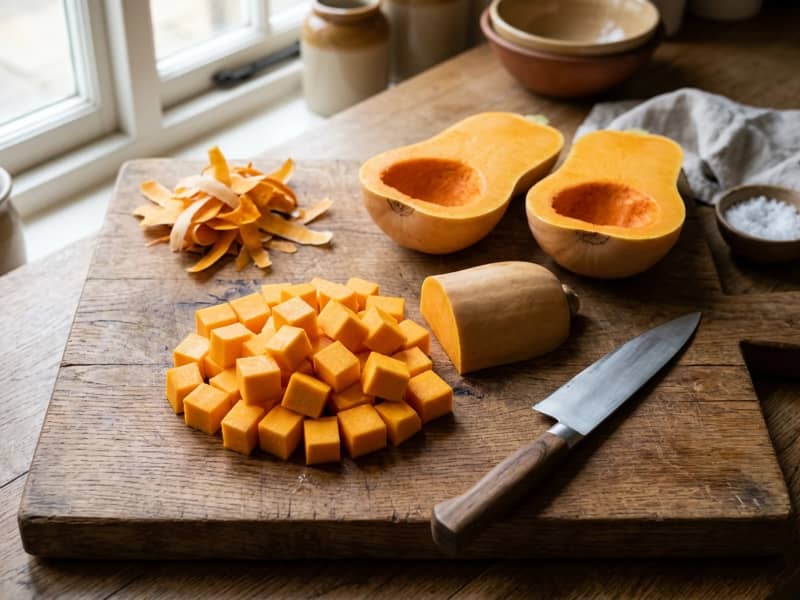 3. Tip the squash onto the tray with 2 tbsp of the olive oil, the ½ tsp salt and a few grinds of pepper, and toss until coated. Spread it in a single layer with a little space between the pieces. Roast for 35–45 minutes, turning once halfway, until the edges are golden brown and a knife slides into the centre with no resistance.
 4. When the squash has about 10 minutes left, warm the remaining 1 tbsp olive oil in a large saucepan over a medium heat. Cook the onion for 5–6 minutes, until soft and translucent but not browned. Stir in the garlic, ginger, cinnamon and cayenne, and cook for 1 minute, stirring, until fragrant.
Add the Liquid
- Tip the roasted squash into the saucepan. Pour a splash of the 850ml stock onto the hot roasting tray and scrape up the browned bits with a wooden spoon. Add this to the pan with the rest of the stock.
Simmer
- Bring to a gentle boil, then turn the heat down and simmer for 8–10 minutes, until the squash is very soft and breaks apart easily against the side of the pan.
Adjust the Consistency
- Take the pan off the heat. With a stick blender, blend until completely smooth. If you are using a jug blender, leave the soup to cool for 10 minutes first, then blend in batches. Stay below the maximum fill mark your manual gives for hot liquids, keep the lid and its vented cap in place with a folded tea towel over the top, and start on the lowest speed.
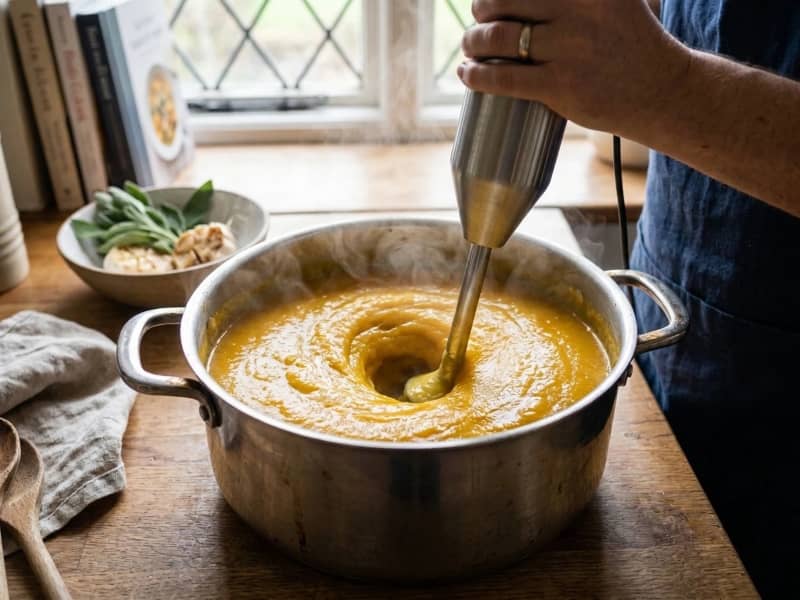 8. Check the thickness. It should coat the back of a spoon. If it is too thick, stir in hot water, 50ml at a time. If it is too thin, return it to the pan and simmer uncovered for a few more minutes, stirring.
9. Stir in the cream, if using, and warm the soup gently without letting it boil. Taste, and season with more salt and pepper until the sweetness feels balanced. Serve hot.
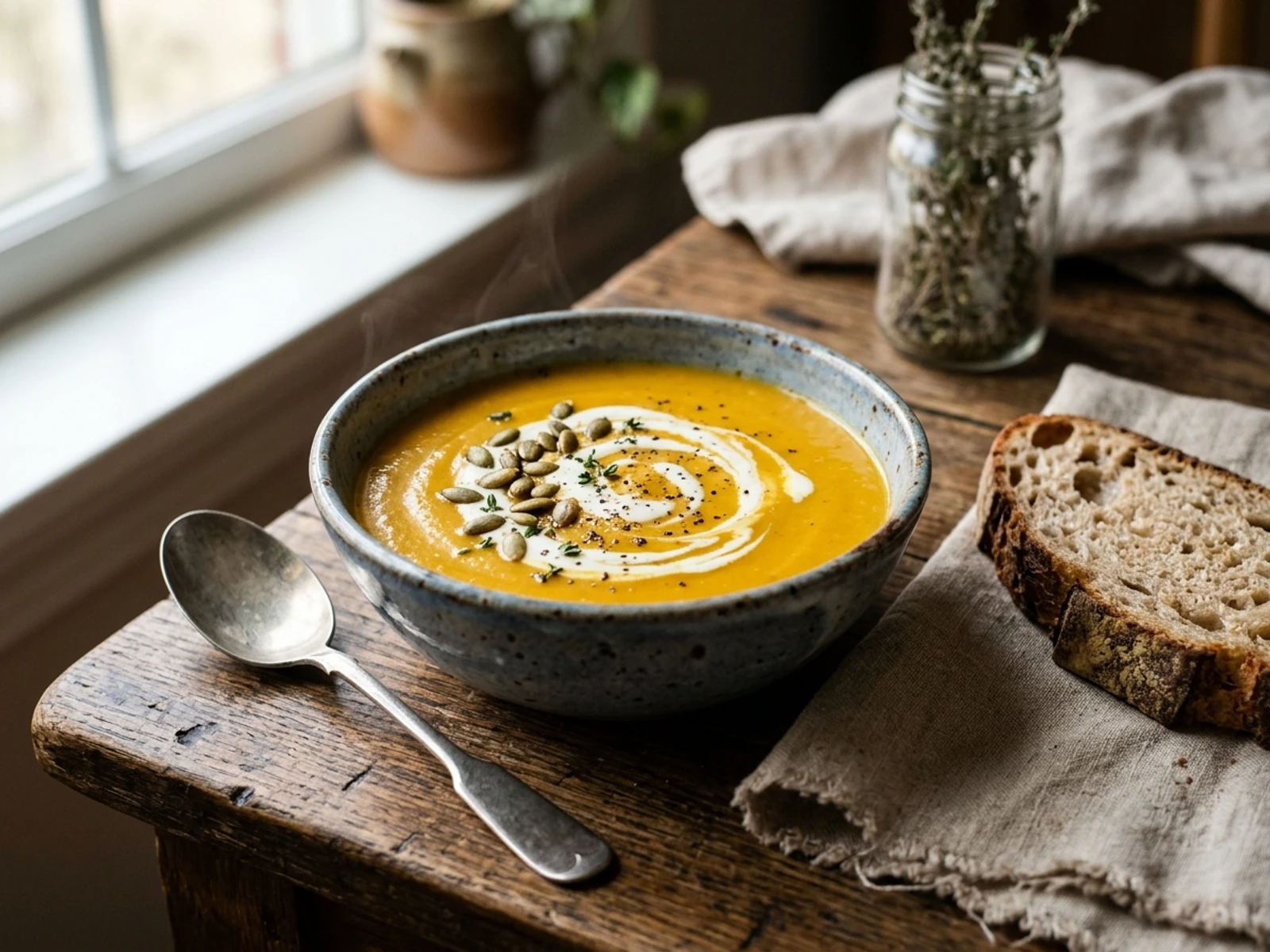
Butternut squash is roasted until tender and lightly caramelised, then blended into a smooth, velvety soup with warming seasonings. Its naturally sweet flavour makes this a cosy choice for autumn lunches or dinners, especially alongside toasted bread.
- Large heavy roasting tray (at least 35 × 25 cm)
- Baking parchment or foil for tray lining
- Large sharp chef's knife and sturdy chopping board
- Large saucepan or stockpot (at least 3-litre capacity)
- Stick/immersion blender (strongly recommended)
- Large metal spoon for scooping seeds
- Ladle
Adjust yield quantities or check items off as you prep.
- Heat the oven to 200°C (180°C fan/gas 6) and line a large roasting tray with baking parchment.
- Peel, deseed and cut the squash into roughly 3cm chunks, working on a steady board.
- Toss the squash with 2 tbsp olive oil, ½ tsp salt and pepper, spread in a single layer and roast 35–45 minutes, turning once, until golden at the edges and knife-tender.
- With about 10 minutes of roasting left, soften the onion in 1 tbsp oil for 5–6 minutes, then cook the garlic, ginger, cinnamon and cayenne for 1 minute until fragrant.
- Add the roasted squash to the pan. Scrape the browned bits from the tray with a splash of the 850ml stock and add them with the remaining stock.
- Bring to a gentle boil and simmer 8–10 minutes until the squash is very soft.
- Off the heat, blend until completely smooth. For a jug blender, cool 10 minutes, blend in batches below the hot-liquid fill mark, keep the vented lid in place and start on low.
- It should coat the back of a spoon. Stir in hot water, 50ml at a time, if too thick, or simmer uncovered a few more minutes if too thin.
- Stir in the cream, if using, and warm gently without boiling. Season to taste and serve hot.
Serving Suggestions
Ladle the soup into warmed bowls and serve it with toasted sourdough or other crusty bread. Toasted pumpkin seeds, a swirl of cream or a few cracked peppercorns add some contrast in texture. A cheese toastie on the side turns it into a more substantial lunch.
Tips for the Best Results
- Give the squash space
- Crowded pieces steam instead of browning, and the browning is where much of the flavour comes from. Use two trays if one looks full.
- Scrape the tray
- The sticky brown bits left on the tray are concentrated flavour, which is why they go into the pan with the stock.
- Adjust the liquid gradually
- Squash needs less liquid than you might expect, so add any extra water a little at a time and taste as you go.
- Soften a tough skin
- If the squash is hard to cut, prick the skin in several places so steam can escape, microwave the whole squash for about 3 minutes, then leave it to cool before you handle it.
- Season in stages
- Salt the squash before roasting and taste again after blending. Roasted squash is naturally sweet, so the finished soup usually needs more seasoning than you expect.
- Blend hot soup with care
- Hot liquid and steam can be forced past a blender lid. Blender manuals typically say to start on the lowest speed, keep the vented lid in place and stay below the maximum fill line for hot liquids, so follow your own manual.
How to Store, Freeze, and Reheat Creamy Roasted Butternut Squash Soup
- Cooling
- Do not put hot soup straight into the fridge. Let it cool at room temperature, ideally in smaller containers so it cools faster, and get it into the fridge or freezer within one to two hours.
- Fridge
- The Food Standards Agency (FSA) has no guidance specific to soup, so these are its general rules for leftovers. Keep the fridge between 0 and 5°C and eat the soup within 48 hours. Some published recipes suggest three days, but 48 hours is the FSA's figure.
- Freezing
- Freeze portions as soon as they have cooled, with the freezer at around −18°C. If you plan to freeze it, leave out the cream: dairy can separate or turn grainy in a thawed soup, so stir it in when you reheat. The FSA sets no time limit for the freezer, and published recipes for this soup suggest up to three months for the best flavour.
- Defrosting
- Defrost in the fridge overnight. The FSA says to use food within 24 hours of it being fully defrosted.
- Reheating
- Reheat gently over a medium-low heat, stirring, until the soup is steaming hot throughout. The FSA advises reheating leftovers only once, so reheat just the portion you plan to eat.
- Where this applies
- This follows FSA guidance for England, Wales and Northern Ireland. Food Standards Scotland says defrosted food can be used within one to two days.
Substitutions and Variations
- Dairy-free cream
- use 2–3 tbsp of coconut cream instead of double cream. Freeze the soup before adding it, as coconut-milk soups can also turn oddly textured after freezing.
- Chicken stock
- use 850ml of chicken stock in place of the vegetable stock. The soup is then no longer vegetarian.
- Curried
- use 2 tsp of mild curry powder in place of the ginger and cinnamon.
- Smoky or nutty
- add a pinch of ground nutmeg or smoked paprika with the ginger and cinnamon.
- Brighter finish
- if the soup tastes very sweet, stir in ½ tsp of lemon juice or cider vinegar after blending, then taste again before adding more.
- Toasted seeds
- toast 2 tbsp of pumpkin seeds in a dry frying pan over a medium heat until lightly golden, then scatter them over each bowl.
Frequently Asked Questions
- Do I have to peel the squash?
- These timings assume peeled chunks. Some published recipes roast halves with the skin on and scoop out the soft flesh afterwards, but that takes much longer (one allows about 1¼ hours at 200°C), so the roasting time here would not apply.
- The soup tastes too sweet or flat. What can I do?
- If it is flat, add a pinch of salt first. If it is too sweet, stir in a little lemon juice or cider vinegar, ½ tsp at a time, and taste after each addition.
- Can I roast the squash a day ahead?
- Yes. Let it cool, refrigerate it within one to two hours, and make the soup the next day. The FSA's 48-hour limit for leftovers counts from when the squash was cooked, so use it within two days of roasting.
- Can I use pre-cut or frozen squash?
- Pre-cut fresh squash saves time: use about 750g and roast it as directed. Frozen squash can release extra water and thin the soup, so hold back some of the stock and add it gradually at the end.

Reviews (0)