
Dinner
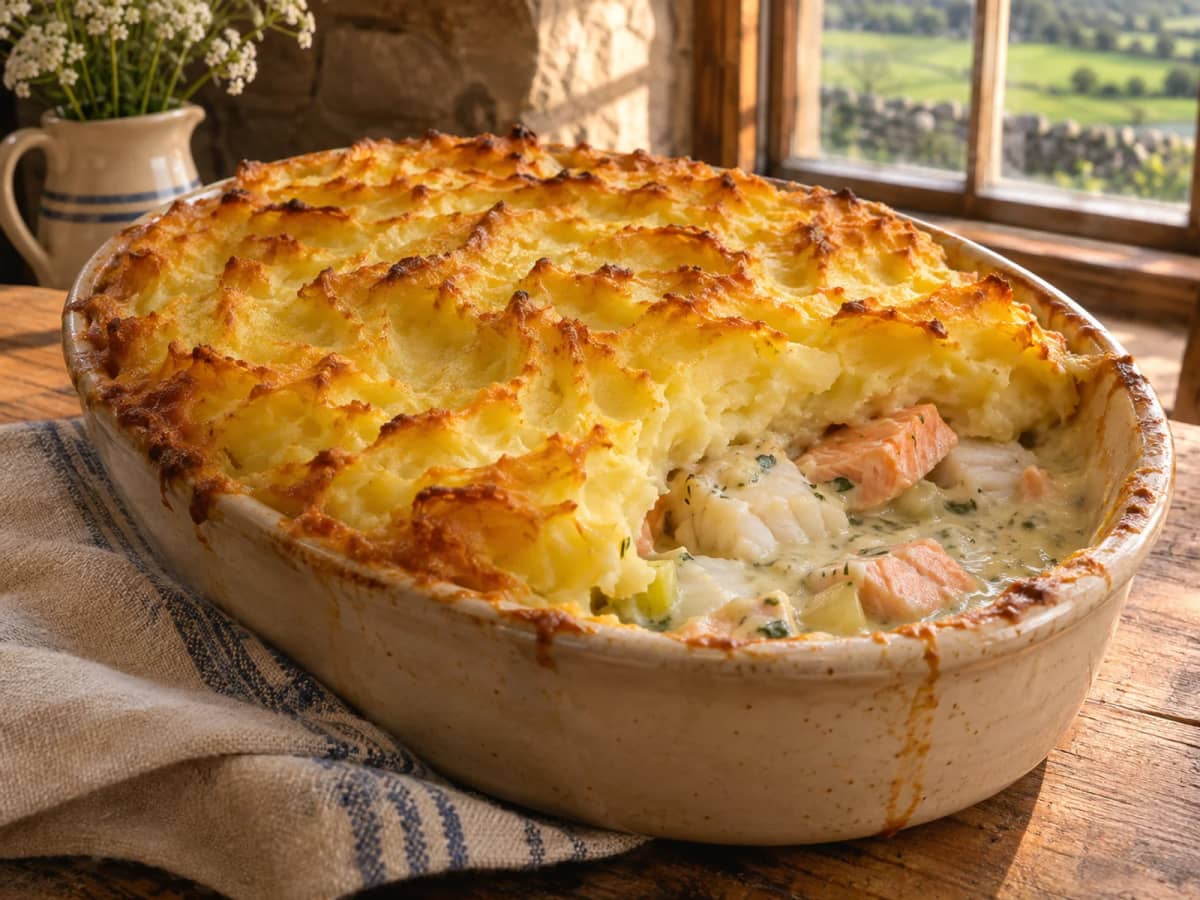
Traditional Fish Pie with Creamy Mash Topping
- Prep
- 35 min
- Cook
- 45 min
- Total
- 1 hr 30 min
- Serves
- 4
Introduction
The complaint most often made about fish pie is that it turns watery in the dish: a good-looking crust of mash sitting over a thin, separated pool instead of a sauce that holds together. Almost every cause traces back to the same thing — liquid that was never driven off or thickened enough before the pie went in the oven. This recipe poaches the fish in milk first, uses that same milk to build the sauce, and keeps the fish large-flaked rather than stirred to pieces, which between them deal with the usual culprits. To estimate ingredient costs, use Recipe Cost Calculator UK. To adjust ingredient quantities for a different number of portions, use Recipe Scaling Calculator. For related guidance, read Fan Oven vs Conventional Oven: What's the Difference?.
Underneath the fix, it is a plain, comforting dish: firm white fish and salmon in a parsley cream sauce, topped with buttery mashed potato and baked until the top is pale gold. Allow around an hour and a half from start to table, most of it hands-off while the fish poaches and the pie bakes. It serves four.
Related recipes
 Creamy Chicken and Leek Pie with Puff PastryTender chicken and softened leeks come together in a creamy filling beneath a golden puff pastry crust. This comforting British pie makes a satisfying family dinner, especially when served with garden peas or steamed seasonal vegetables.
 Traditional Lancashire Hotpot with Lamb and PotatoesTender lamb, onions and thinly sliced potatoes are slowly cooked together to create a rich, warming Lancashire hotpot. This traditional northern English dish brings simple ingredients together in a satisfying one-pot dinner with a beautifully golden potato topping.
What You'll Need
Ingredients
For the fish and sauce
- 400g skinless cod or haddock fillets
- 200g skinless salmon fillet
- 450ml whole milk
- 1 dried bay leaf
- 5 whole black peppercorns
- 40g unsalted butter
- 40g plain white flour
- 100ml double cream
- 1 tbsp fresh flat-leaf parsley, finely chopped
For the mash topping
- 900g floury potatoes, such as Maris Piper or King Edward
- 50g unsalted butter
- 60ml warm whole milk
- Fine sea salt and ground white pepper
Cod and haddock both work well as the white fish base; haddock has a slightly more pronounced flavour and holds its flake a little better through baking. Salmon adds colour, richness and a different texture, and the two together give the pie more interest than one fish alone. Buy fresh or well-thawed fillets rather than a frozen "cook from frozen" fish pie mix: fish that goes into the dish still partly frozen releases extra liquid as it finishes cooking in the oven, which is one of the more common routes to a watery pie.
A floury potato such as Maris Piper or King Edward mashes to a dry, fluffy texture that sits as a proper crust rather than sinking into the sauce; a waxy potato stays gluey when mashed and is better saved for other dishes.

How to Make Traditional Fish Pie with Creamy Mash Topping
Poach the Fish and Cook the Potatoes
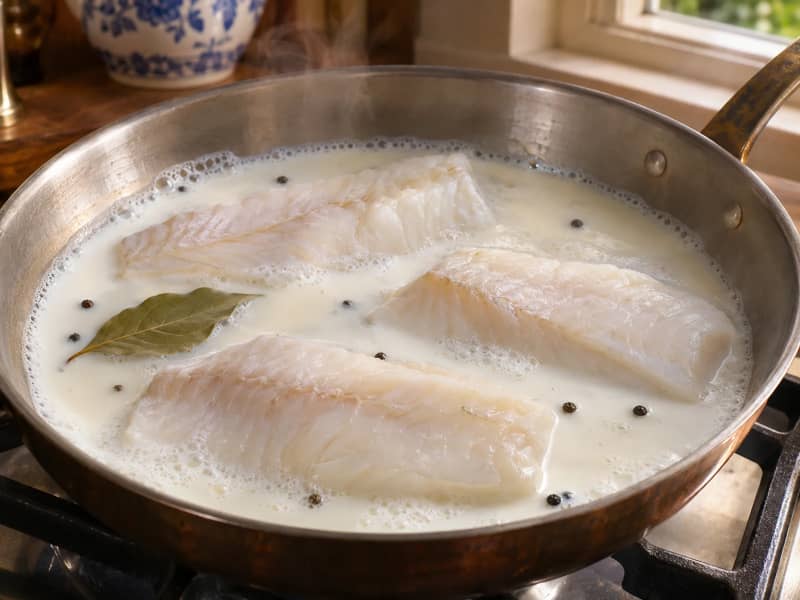
- Lay the cod, haddock and salmon in a wide, shallow pan and pour over the milk; it should just cover the fish. Add the bay leaf and peppercorns. Bring gently to a bare simmer over a medium-low heat — small bubbles at the edge of the pan, not a rolling boil — and poach for 5–6 minutes, until the fish is just opaque and flakes when pressed with a fork but is not yet falling apart. Lift the fish onto a plate with a slotted spoon and strain the poaching milk into a jug, discarding the bay leaf and peppercorns. Set both aside; the fish will finish cooking in the oven, so slightly underdone at this stage is right.
- Meanwhile, put the potatoes in a large pan of cold salted water, bring to the boil and simmer for 15–20 minutes, until a knife slides in with no resistance. Drain well and return to the pan over a low heat for a minute to let any remaining water steam off, then mash until smooth. Beat in the butter and warm milk, and season with salt and white pepper.
Make the Sauce and Assemble
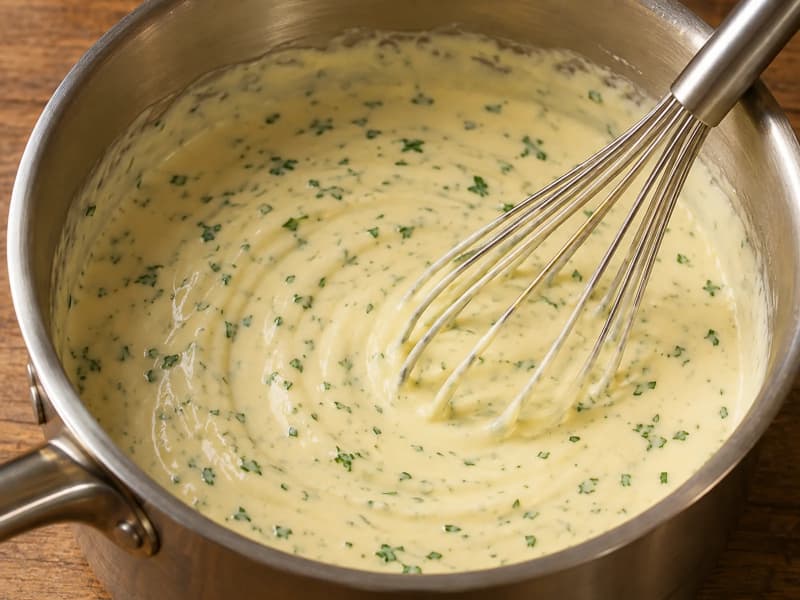
- Melt the butter in a saucepan over a medium heat, add the flour and whisk constantly for about a minute to cook out the raw flour taste. Take the pan off the heat and gradually whisk in the reserved poaching milk, a little at a time, until smooth. Return to a medium heat and cook, stirring, for 3–4 minutes, until the sauce is thick enough to coat the back of a spoon and leave a clear line when you draw a finger through it. Stir in the double cream and parsley, and season to taste. A sauce that still looks thin at this point will not thicken further in the oven; keep it on the heat until it holds its shape on the spoon.
- Heat the oven to 200°C (180°C fan/gas 6). Flake the poached fish into large pieces, discarding any stray bones, and scatter it evenly across the base of a 1.5–2 litre ovenproof dish. Pour the sauce over the fish and fold very gently once or twice so the fish is coated without breaking up further.
Top with Mash and Bake
- Spoon the mashed potato over the fish and sauce, spreading it right to the edges of the dish to seal in the filling, then rough up the surface with the back of a fork to help it crisp. Bake for 25–30 minutes, until the top is pale gold and the filling is bubbling at the edges. Rest for 5 minutes before serving so the sauce settles.
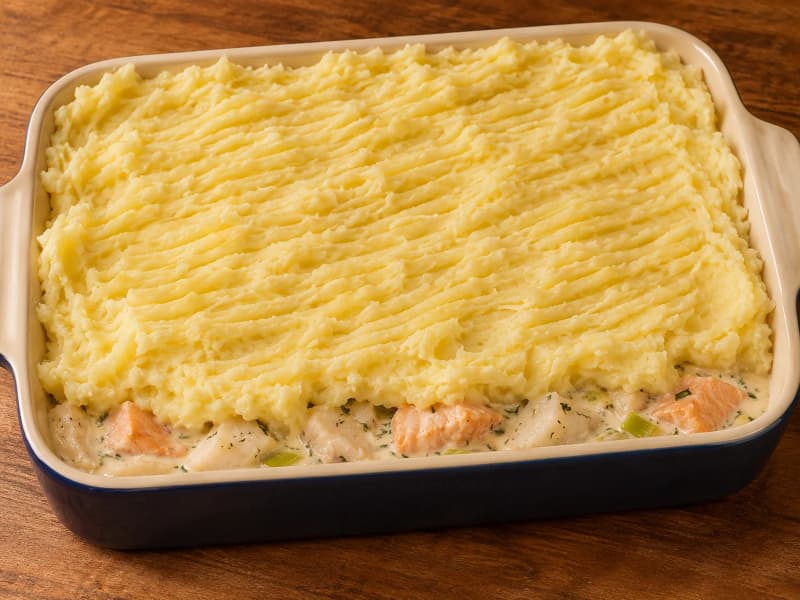
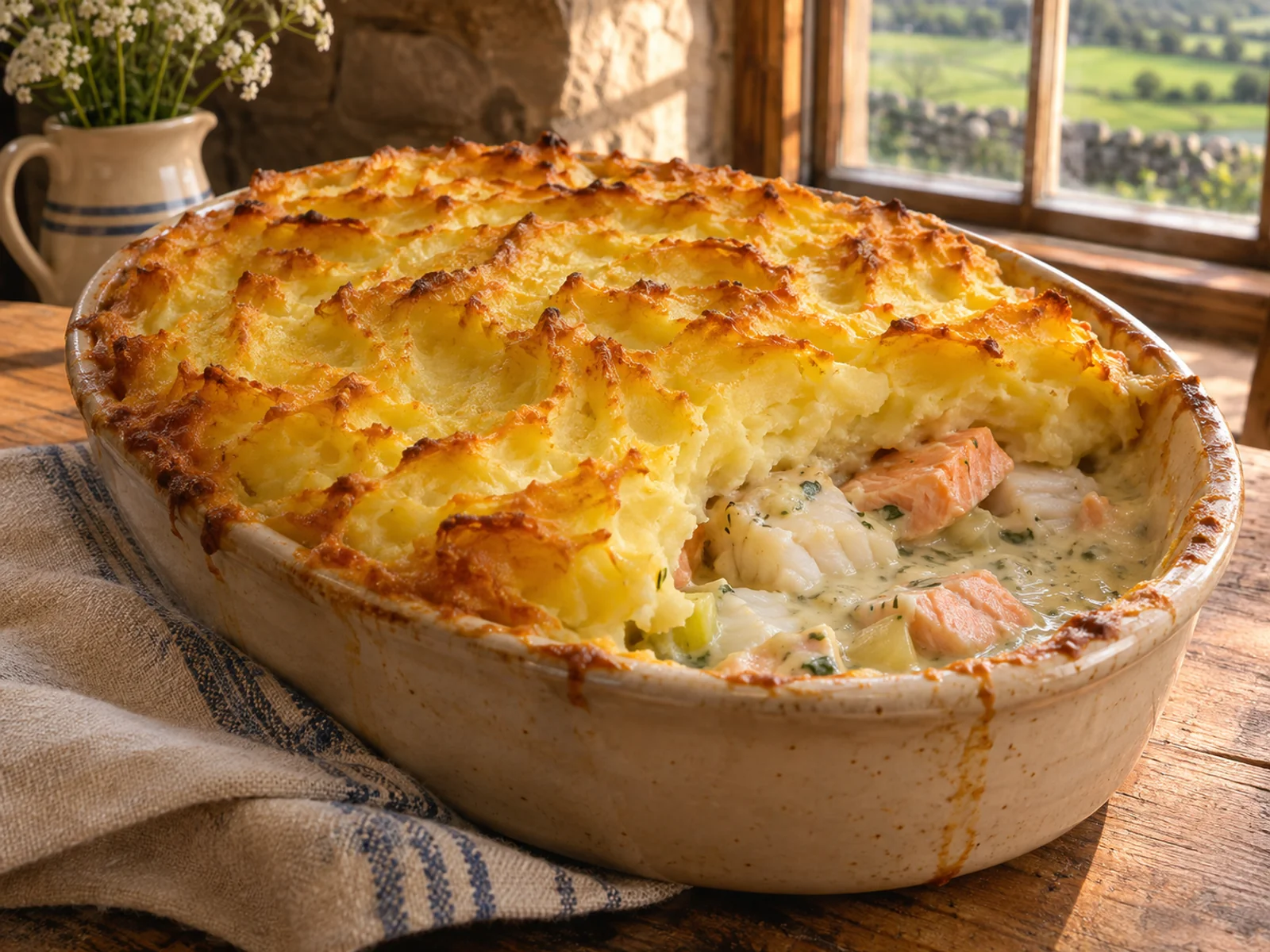
Flaky fish in a creamy sauce is tucked beneath a golden mashed potato topping in this traditional British fish pie. It's a warming, comforting dinner that pairs beautifully with steamed peas, green beans or other seasonal vegetables.
- Large saucepan (for boiling potatoes and gentle fish poaching)
- Medium saucepan (for roux and parsley cream sauce)
- Deep ovenproof baking dish, approx. 28 x 20 cm (2-litre capacity)
- Potato masher or potato ricer
- Slotted spoon or fish slice
- Fine mesh sieve
- Whisk
- Digital probe thermometer
Adjust yield quantities or check items off as you prep.
- Poach the cod, haddock and salmon gently in milk with a bay leaf and peppercorns for 5–6 minutes until just opaque, then strain and reserve the milk.
- Boil the potatoes until tender, drain and dry briefly, then mash with butter and warm milk.
- Make a roux, whisk in the reserved poaching milk, simmer until it coats the back of a spoon, then stir in cream and parsley.
- Flake the fish into a dish, pour over the sauce, then top with the mashed potato and rough up the surface with a fork.
- Bake at 200°C (180°C fan/gas 6) for 25–30 minutes until golden, then rest for 5 minutes before serving.
What to Serve It With
Garden peas or buttered green beans are the classic, simple side, adding a fresh contrast to the richness of the pie. A crisp green salad with a sharp vinaigrette works for the same reason. If you want a heartier plate, wilted spinach or steamed broccoli both go well, and neither adds extra starch to compete with the mash.
Tips for the Best Results
- Poach, don't boil, the fish
- A bare simmer with small bubbles at the edge keeps the fish tender; a hard boil toughens it and forces out extra liquid, which ends up in the finished pie.
- Underdo the fish slightly at the poaching stage
- It finishes cooking in the oven, so fish that is just opaque and barely flaking when you take it off the heat will be fully but not overdone by the time the pie comes out.
- Cook the sauce until it coats a spoon properly
- This is the single step most responsible for a watery or a good fish pie. If you can see the sauce running off the back of a spoon in a thin layer rather than holding as a coat, give it another minute or two over the heat before combining it with the fish.
- Dry the potatoes before mashing
- A minute of steaming off excess water in the empty pan after draining keeps the mash from becoming thin and keeps it sitting as a proper crust rather than merging into the sauce underneath.
- Avoid vegetables that release water, or cook them separately first
- Mushrooms, in particular, continue to release liquid as they bake, which dilutes the sauce. If you want to add them, sauté and drain them before folding them in.
- Seal the edges with mash
- Spreading the mash right to the sides of the dish, not just over the centre, stops the sauce bubbling up and over during baking.
Substitutions and Variations
- Smoked haddock
- replace half the cod or haddock with the same weight of smoked haddock for a more traditional, fuller-flavoured pie. Poach it in the same milk as the other fish.
- Prawns
- add 100g of raw or cooked king prawns to the fish mixture in step 4. If using raw prawns, they will finish cooking in the oven alongside the fish.
- Cheese topping
- scatter 50g of grated mature Cheddar over the mash before baking for a golden, crisp crust with extra savouriness.
- Hard-boiled egg
- slice 2 hard-boiled eggs and layer them with the fish for a more old-fashioned, filling version of the pie.
- Leeks
- sauté 1 sliced leek in a little butter until soft, then fold it into the sauce with the fish. Cook it separately first, as raw leek releases water during baking.
- Dairy-free
- use a plant-based milk and dairy-free butter and cream alternative throughout. The sauce will be slightly less rich, but the method is unchanged.
How to Store, Make Ahead, and Reheat Traditional Fish Pie with Creamy Mash Topping
- Making ahead
- The pie can be fully assembled, covered and kept in the fridge for up to a day before baking. Bake it straight from the fridge, adding about 10 minutes to the covered baking time, or uncover from the start and watch the top so it does not over-brown before the filling is hot through.
- Cooling and storing
- Let the pie cool at room temperature, then cover and refrigerate within one to two hours. The Food Standards Agency has no guidance written specifically for fish pie, so use its general rule for cooked leftovers: keep the fridge between 0 and 5°C and eat within 48 hours.
- Freezing
- Fish pie freezes well once baked and cooled. Freeze in an airtight container for up to two months; the texture of the sauce can separate slightly more than a meat-based pie on thawing, so stir gently when reheating to bring it back together. Defrost overnight in the fridge before reheating.
- Reheating
- Reheat in a covered ovenproof dish at 180°C (160°C fan) for 25–30 minutes, until piping hot in the centre, or in individual portions in the microwave on high for 3–4 minutes, stirring or rotating halfway. The FSA advises reheating leftovers only once, so reheat only the portion you plan to eat.
Frequently Asked Questions
- Why is my fish pie watery?
- The three usual causes are fish that went in still partly frozen, a sauce that was taken off the heat before it thickened enough to coat the back of a spoon, and watery vegetables such as mushrooms added raw. Poaching the fish properly, cooking the sauce until it holds its shape, and draining or pre-cooking any vegetables all address this directly.
- Can I use frozen fish?
- Yes, but defrost it fully and pat it dry before poaching; fish labelled for cooking from frozen inside a pie releases extra liquid as it finishes cooking in the oven, which is one of the most common causes of a watery filling.
- How do I know when the fish is safely cooked?
- The UK Food Standards Agency's figure for fish is an internal temperature of 63°C, at which point the flesh looks opaque throughout and flakes easily with a fork rather than looking translucent or glassy. In this recipe, the fish poaches until just opaque and then finishes cooking in the oven, so check a thick piece in the centre of the dish before serving if you are unsure.
- Can I make this without poaching the fish separately?
- You can place raw fish directly into the dish and pour a separately made white sauce over it, then bake for a little longer, but poaching first and using the poaching milk in the sauce gives more flavour and lets you check the fish is properly cooked before it goes under the mash, where it is harder to see.
- My mashed potato topping sank into the filling. What went wrong?
- This usually happens when the sauce is too thin for the mash to sit on top of, or when the mash itself is too soft. Make sure the sauce coats the back of a spoon before assembling, and dry the potatoes over a low heat for a minute after draining, before mashing, so the topping is firm enough to hold its shape.
- Can I use only one type of fish?
- Yes. 600g of any firm white fish, such as cod, haddock or pollock, works on its own if you prefer not to use salmon. The pie will be a little less rich without the oily fish, but otherwise the method stays the same.




Reviews (0)