
Dinner
Traditional Lancashire Hotpot with Lamb and Potatoes

- Prep
- 25 min
- Cook
- 2 hr 25 min
- Total
- 3 hr
- Serves
- 4
Introduction
A Lancashire hotpot is judged on its potatoes as much as its lamb: a tall, round dish layered with meat, onion and carrot, then roofed entirely in overlapping potato slices and baked slowly until the top crisps to a deep gold while the meat beneath turns soft enough to pull apart with a spoon. The name comes from the tall, straight-sided pot it was traditionally cooked in, a shape that lets the potato topping stand several layers deep without drying out. To estimate ingredient costs, use Recipe Cost Calculator UK. To adjust ingredient quantities for a different number of portions, use Recipe Scaling Calculator. For related guidance, read Fan Oven vs Conventional Oven: What's the Difference?.
Mrs Beeton recorded a version of the dish in 1861, though under a slightly different name and without the defining potato roof; nobody can pin down exactly when the hotpot as it is known today took shape, and some of the older recipes add a lamb's kidney or two between the meat and the potatoes for extra savouriness. This version keeps to lamb, onion, carrot and potato, which is the form most people in Lancashire would recognise as the everyday dish rather than the special-occasion one.
Allow about three hours in total, most of it unattended oven time: 25 minutes to prepare and layer, and roughly two and a half hours in the oven. It serves four.
Related recipes
 Classic Toad in the Hole Recipe – Easy British FavouriteA classic British toad in the hole with golden Yorkshire pudding batter, juicy sausages and rich onion gravy.
 Creamy Chicken and Leek Pie with Puff PastryTender chicken and softened leeks come together in a creamy filling beneath a golden puff pastry crust. This comforting British pie makes a satisfying family dinner, especially when served with garden peas or steamed seasonal vegetables.
What You'll Need
Ingredients
For the lamb and vegetables
- 800g bone-in lamb neck chops or lamb shoulder pieces
- 2 large brown onions (about 400g), thinly sliced
- 2 medium carrots (about 200g), sliced into rounds
- 1 tbsp vegetable oil or lard
- 350ml reduced-salt lamb or beef stock
- 1 tbsp Worcestershire sauce
- 2 tsp fresh thyme leaves (or 1 tsp dried thyme)
For the potato topping
- 900g floury potatoes, such as Maris Piper or King Edward
- 25g unsalted butter, melted
- 1 tsp fine sea salt and freshly cracked black pepper
Bone-in lamb neck chops are the traditional cut and the one worth seeking out at a butcher's counter, because the bone and connective tissue break down over the long cook and thicken the gravy from within. Lamb shoulder, cut into large chunks, is the easier supermarket substitute and gives a similar result, just with slightly less body in the sauce. Either way, buy on the bone or with some fat marbling; very lean diced lamb "stewing steak" labelled for hotpot dries out faster than chops or shoulder.
A floury potato such as Maris Piper or King Edward holds its slices without collapsing into the gravy, and its surface starch is what lets the top layer crisp rather than just steam. A waxy potato, such as Charlotte or a new potato, stays firm but will not brown in the same way.
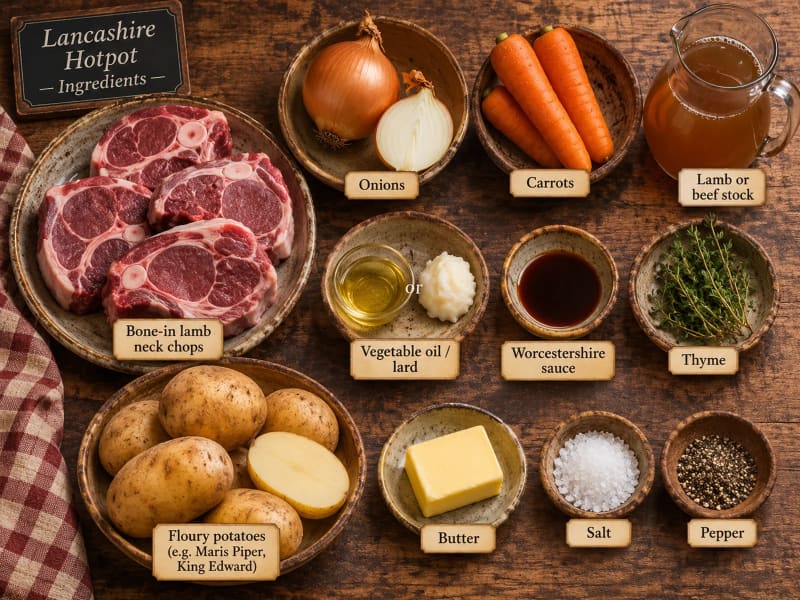
How to Make Traditional Lancashire Hotpot with Lamb and Potatoes
Brown the Lamb and Heat the Oven
- Heat the oil or lard in a large frying pan over a medium-high heat. Season the lamb with salt and pepper and brown it in batches for 2–3 minutes per side, until deeply coloured but not cooked through. Transfer to a plate. Do not crowd the pan: lamb added all at once steams in its own juice instead of browning, and the colour it picks up here is where most of the dish's flavour comes from.
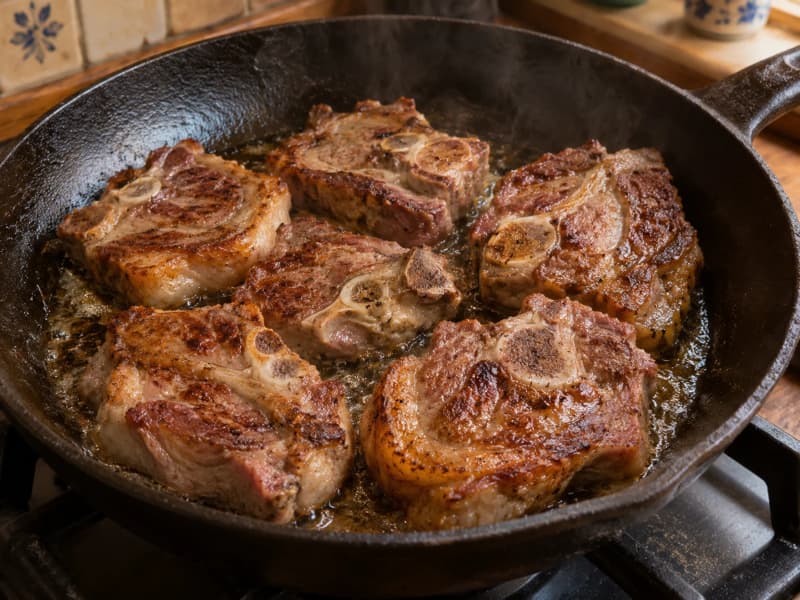 2. Heat the oven to 160°C (140°C fan/gas 3).
Build the Base and Layer the Potatoes
- In the same pan, off the heat, tip in the sliced onions and carrots and stir them through the fat left behind, scraping up any browned bits from the bottom. Spread half the onions and carrots over the base of a 2–2.5 litre ovenproof dish, about 20–24cm across. Arrange the browned lamb on top, then scatter over the remaining onions and carrots, the thyme and a little more salt and pepper.
- Pour over the stock and Worcestershire sauce; it should come about two-thirds of the way up the meat and vegetables, not cover them completely. Slice the potatoes about 3–4mm thick and arrange them in overlapping circles over the top, working from the outside edge inwards, until the whole surface is covered. Brush the potato layer generously with the melted butter.

Cook, Uncover and Rest
- Cover the dish tightly with a lid or foil and bake for 1 hour 45 minutes to 2 hours, until a skewer slides into the lamb and the thickest part of the potato layer with almost no resistance. The lamb is ready when it begins to pull away from the bone easily rather than needing to be cut.
- Remove the lid or foil, brush the potatoes with any remaining butter and return the dish to the oven, uncovered, for a further 30–40 minutes, until the top is deep golden brown and the edges of the potato slices have crisped. If the top is browning faster than the inside is tender, loosely tent it with foil and continue cooking.
- Rest the hotpot for 10 minutes before serving. The gravy is thin and loose straight from the oven; resting gives the starch from the potatoes time to thicken it slightly and lets the dish hold together when spooned onto a plate.
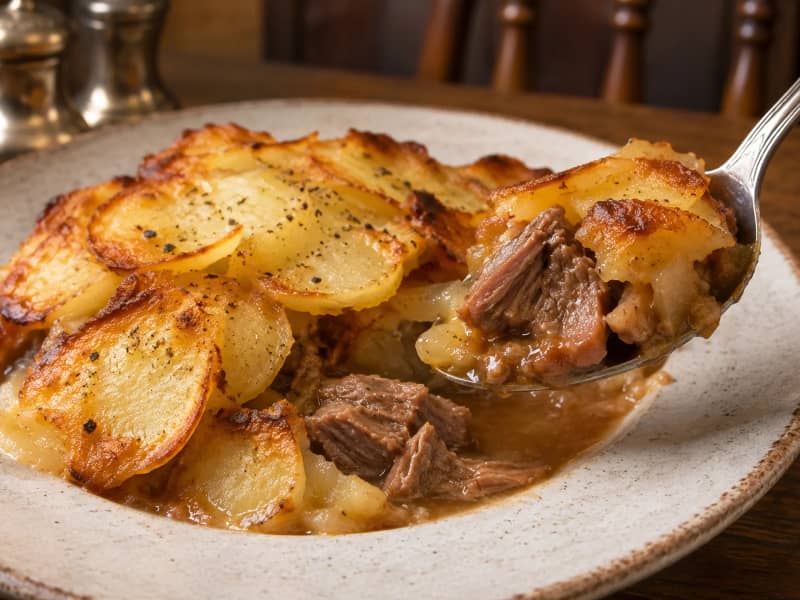
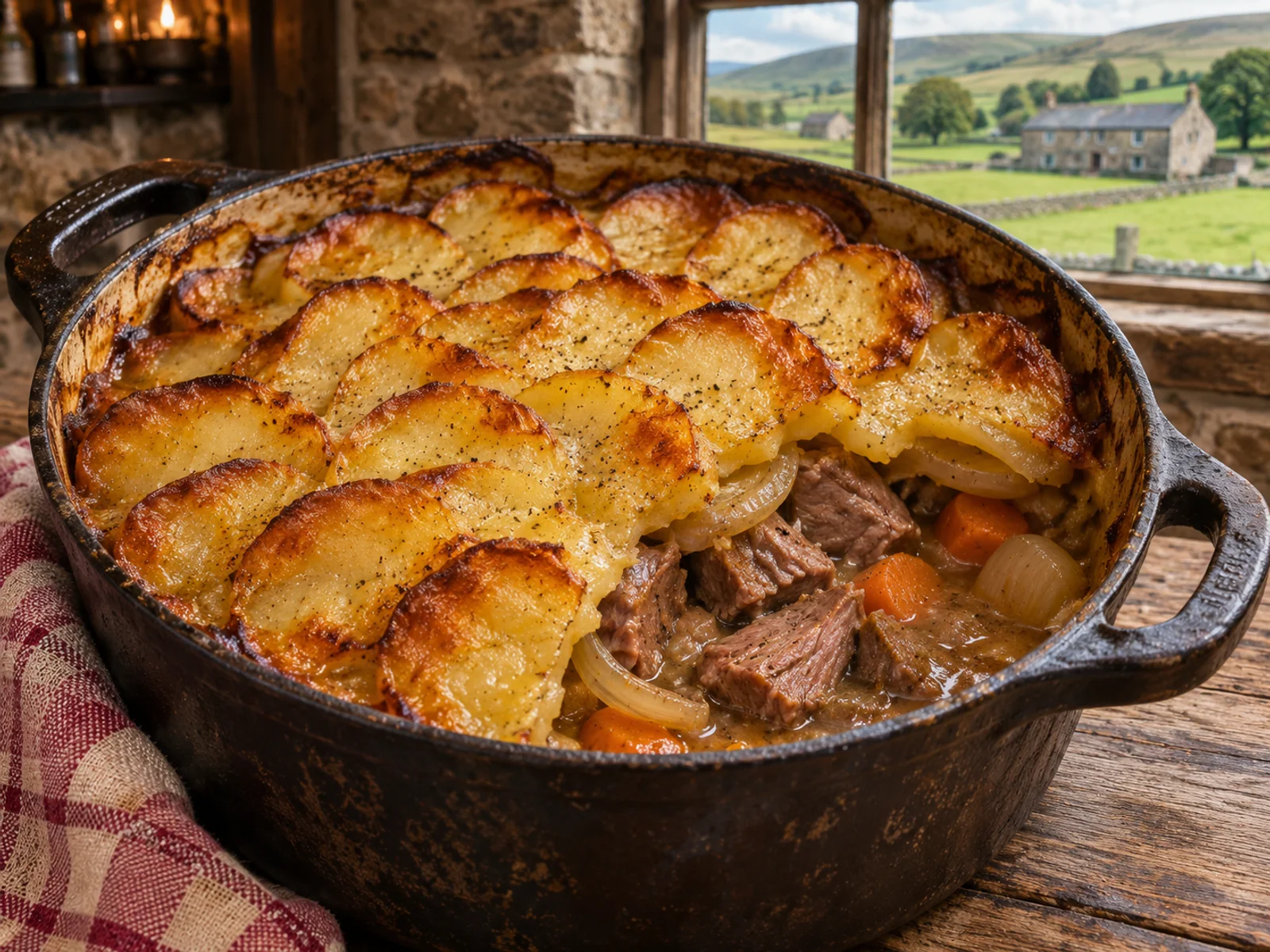
Tender lamb, onions and thinly sliced potatoes are slowly cooked together to create a rich, warming Lancashire hotpot. This traditional northern English dish brings simple ingredients together in a satisfying one-pot dinner with a beautifully golden potato topping.
- Heavy flameproof casserole dish with tight-fitting lid, 24–26 cm (2.5–3 litre capacity)
- Large frying pan (for browning the lamb chops)
- Sharp chef's knife or mandoline (for slicing potatoes to 3–4 mm)
- Pastry brush (for brushing melted butter)
- Measuring jug and kitchen scales
Adjust yield quantities or check items off as you prep.
- Brown the seasoned lamb in batches in hot oil or lard, 2–3 minutes per side, then set aside.
- Heat the oven to 160°C (140°C fan/gas 3).
- Layer half the onions and carrots in the dish, top with the lamb, then the rest of the onions, carrots and thyme.
- Pour over the stock and Worcestershire sauce, then arrange overlapping potato slices over the top and brush with melted butter.
- Cover tightly and bake for 1 hour 45 minutes to 2 hours, until the lamb is fork-tender.
- Uncover, brush with remaining butter and bake for a further 30–40 minutes until deep golden and crisp.
- Rest for 10 minutes before serving so the gravy thickens.
Alternative Cooking Methods
A slow cooker suits this dish well, since it is already built around several hours of low, steady heat. Brown the lamb and soften the onions and carrots in a pan as in the method above, then layer everything into the slow cooker with the stock and Worcestershire sauce, topping with the potato slices. Cook on low for 6–7 hours, until the lamb is tender. A slow cooker will not brown the potato top; transfer the finished hotpot to an ovenproof dish and finish under a hot grill, or in an oven at 220°C (200°C fan), for 10–15 minutes to crisp the surface before serving.
| Method | Temperature | Time | Notes |
|---|---|---|---|
| Oven (as written) | 160°C (140°C fan/gas 3) | ~1hr45–2hrs covered, then 30–40 min uncovered | Browns the potato top directly in the oven |
| Slow cooker | Low | 6–7 hours | Potato top won't brown on its own; finish under a hot grill or at 220°C (200°C fan) for 10–15 min |
What to Serve It With
Pickled red cabbage is the traditional accompaniment in Lancashire and its sharpness cuts through the richness of the lamb and gravy better than almost anything else. Buttered seasonal greens, such as cabbage, curly kale or spring greens, add a fresh, slightly bitter contrast on the side. For a heartier plate, add a slice of crusty bread for mopping up the gravy; no extra potatoes are needed, since the topping already provides them.
Tips for the Best Results
- Brown the lamb properly, in batches
- The colour from browning is the main source of flavour in the finished gravy. A crowded pan steams the meat grey instead, and the dish tastes flat no matter how long it bakes afterwards.
- Keep the stock below the potato layer
- The liquid should sit about two-thirds of the way up the meat, not cover it. Potatoes that sit partly submerged in stock from the start will not crisp, however long you leave the lid off at the end.
- Slice the potatoes to an even thickness
- Slices of 3–4mm are thin enough to cook through in the time the lamb needs and thick enough to hold their shape. Much thinner, and the edges burn before the centre is tender; much thicker, and the top stays pale.
- Judge doneness by the lamb, not the clock
- Lamb neck chops vary in size and fat content, so test with a skewer rather than relying only on the time given. It should meet almost no resistance, and the meat should look ready to come away from the bone.
- Rest it before serving
- Ten minutes off the heat lets the gravy thicken from loose to spoonable, and the layers hold together better on the plate.
- Don't skip the butter on the potatoes
- Butter brushed over the top twice, once before covered baking and once before the uncovered finish, is what gives the surface its deep colour and slight crispness rather than a pale, steamed look.
Substitutions and Variations
- Kidney
- for a more traditional, old-fashioned hotpot, add 2 trimmed and halved lamb's kidneys among the meat in step 3. They add a stronger, slightly mineral flavour that is less common in modern versions.
- Beef
- swap the lamb for the same weight of diced beef shin or chuck steak. The cooking time stays about the same, since both cuts need long, slow cooking to become tender.
- Pearl barley
- stir 50g of pearl barley into the stock before pouring it over the layers. It thickens the gravy as it cooks and adds a little extra bulk to the dish.
- Extra vegetables
- a sliced leek or a handful of pearl onions can be layered in with the onions and carrots for a slightly sweeter, more rounded flavour.
- No Worcestershire sauce
- most British brands of Worcestershire sauce contain anchovies. Leave it out, or use a vegetarian Worcestershire-style sauce, and add an extra pinch of salt to make up the savoury note.
- Oven dish size
- a shallower, wider dish (such as a 30cm roasting tin) will cook a little faster and give more surface area of crisp potato relative to the amount of lamb; start checking for doneness from around 1 hour 30 minutes.
How to Store, Make Ahead, and Reheat Traditional Lancashire Hotpot with Lamb and Potatoes
- Making ahead
- The hotpot can be assembled up to the point of baking a day in advance: layer everything into the dish, cover and keep it in the fridge. Add about 15–20 minutes to the covered baking time if cooking it straight from cold.
- Cooling and storing
- Let the hotpot cool at room temperature, then cover and refrigerate within one to two hours, following the Food Standards Agency's general guidance for cooked meat dishes. The FSA has no figure written specifically for hotpot, so use its standard advice for cooked leftovers: keep the fridge between 0 and 5°C and eat within 48 hours.
- Freezing
- The dish freezes well once baked and cooled, though the potato topping softens on thawing and will not regain its crisp edge. Freeze in an airtight container for up to three months. Defrost overnight in the fridge before reheating.
- Reheating
- Reheat individual portions in a covered ovenproof dish at 180°C (160°C fan) for 25–30 minutes, until piping hot all the way through, or in the microwave on high for 3–4 minutes, stirring or rotating halfway. The FSA advises reheating cooked food only once, so reheat just the amount you plan to eat. If the potato top has gone soft from freezing, a few minutes under a hot grill after reheating will crisp it again.
Frequently Asked Questions
- Why is my hotpot watery instead of thick and rich?
- Too much stock is the usual cause. The liquid should come about two-thirds of the way up the meat and vegetables, not cover them; the potato topping releases starch as it cooks, which is what thickens the gravy, and a flooded dish dilutes that effect. Resting the finished hotpot for 10 minutes before serving also helps the gravy settle and thicken.
- Why won't my potato topping go crisp and golden?
- Usually because it has been sitting in liquid. If the stock level was too high, the bottom layers of potato steam rather than roast. Removing the lid for the final 30–40 minutes of baking, brushing the top with butter and making sure the dish is not overcrowded with liquid are the three things that make the difference.
- Can I use lamb mince instead of chops or shoulder?
- Not for a traditional hotpot; mince cooks through in minutes rather than hours and would turn to a dense, grainy layer under slow baking. If you want a minced version, that is closer to a cottage pie or shepherd's pie, which use a different method and a mashed rather than sliced potato topping.
- Is lamb safe to eat if it still looks pink in the hotpot?
- Lamb neck chops and shoulder pieces in this recipe are braised for close to two hours, well beyond the point where any part of the meat would still be pink; by the time it is tender enough to pull from the bone, it is thoroughly cooked. Food safety guidance on rare or pink lamb applies to quickly seared whole cuts such as chops or a roasting joint served medium-rare, not to meat that has spent hours in a slow braise.
- Can I make this without a special hotpot dish?
- Yes. Any ovenproof dish with a lid, or one you can cover tightly with foil, that holds about 2–2.5 litres and is roughly 20–24cm across will work. The traditional tall, straight-sided pot gives the deepest layer of potato, but a casserole dish or a deep roasting tin covered with foil produces the same result.
Reviews (0)