
Desserts
Classic Bread and Butter Pudding with Raisins

- Prep
- 20 min
- Cook
- 35 min
- Total
- 1 hr 30 min
- Serves
- 6
Introduction
Buttered bread, plump raisins and a vanilla custard of eggs, milk and double cream are baked together into a soft, set pudding with crisp, golden tips. The bread does most of the work: once it has soaked up the custard, the pudding needs little more than a gentle oven and a short rest. For butter measurements in different units, use Butter Conversion Calculator. When comparing egg sizes, use UK Egg Size Converter. For related guidance, read The Ultimate UK to US Baking & Cooking Conversion Guide: Oven Temps, Ingredient Densities, and Measuring Rules.
Allow about 1½ hours in all: 20 minutes to prepare, 30 minutes for the bread to soak, 35 minutes to bake and 5 minutes to rest. It serves six, and a dish of 20 × 25cm is the right size.
Related recipes
 Apple and Blackberry Crumble with Oat ToppingTender apples and juicy blackberries bake together beneath a golden, buttery oat crumble topping. This comforting British dessert celebrates the flavours of autumn and is delicious served warm with creamy custard, vanilla ice cream or pouring cream.
 Classic Sticky Toffee Pudding with Toffee SauceA soft, date-filled sponge is generously coated in a rich, warm toffee sauce for a deeply comforting British dessert. Sticky toffee pudding is especially lovely served warm with vanilla ice cream, pouring cream or traditional custard.
What You'll Need
Equipment
- A 20 × 25cm ovenproof dish, at least 5cm deep
- A heatproof bowl, for plumping the raisins
- A large jug or bowl and a balloon whisk, for the custard
- A butter knife
- A fine sieve (optional)
- Foil, in case the top browns too quickly
Ingredients
For the pudding
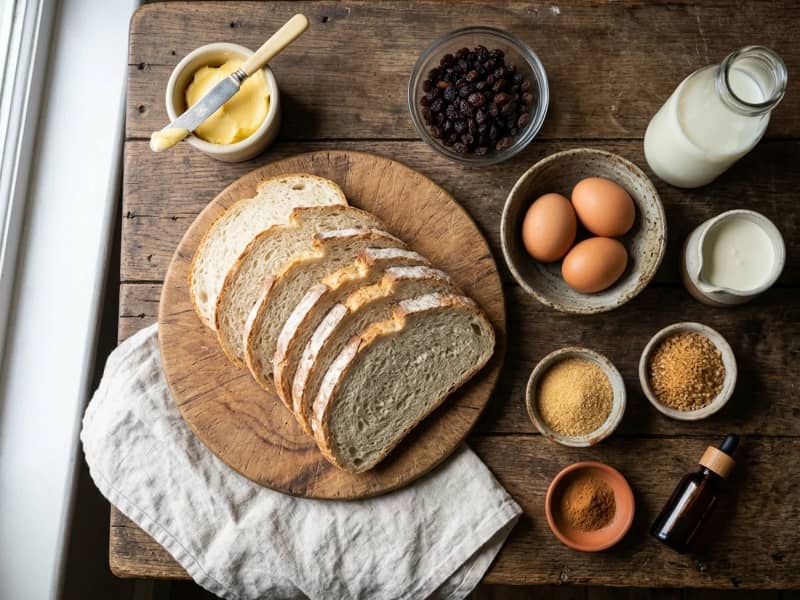
- 8 slices of slightly stale white bread (about 250–300g), crusts left on
- 50g unsalted butter, softened
- 75g raisins
For the custard
- 3 large eggs
- 300ml whole milk
- 150ml double cream
- 50g caster sugar
- 1½ tsp pure vanilla extract
- ½ tsp ground cinnamon
For the topping
- 1 tbsp demerara sugar
Thick-cut sliced white bread works well, and it should be slightly dry rather than very fresh, so it holds its shape as it soaks. If the crusts are very hard, trim them off. The custard measures about 600ml, which is enough to cover the bread once it is pressed down in the dish. If you want to be sure the eggs are suitable for everyone, choose eggs with the British Lion mark.
How to Make Bread and Butter Pudding
Prepare the Bread and Raisins
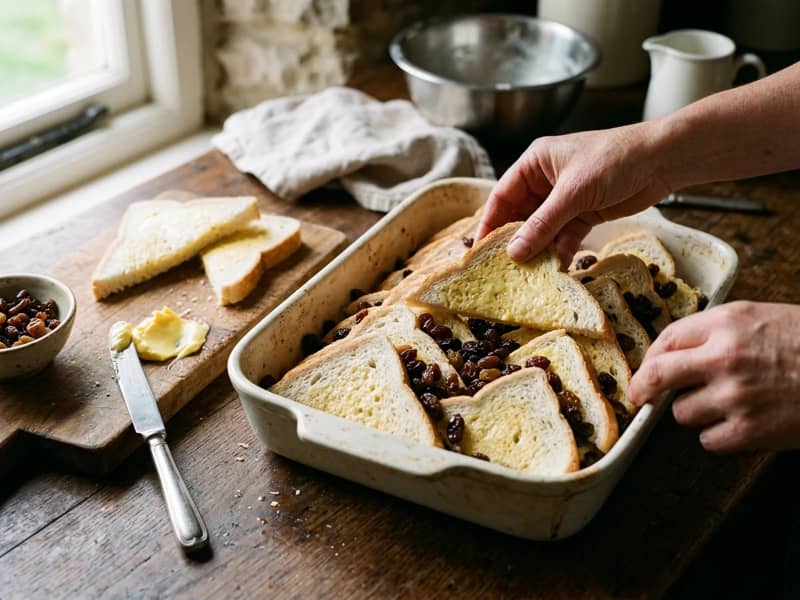
- Put the raisins in a heatproof bowl, cover them with just-boiled water and leave them for 5–10 minutes to plump up. Drain them well and pat them dry. Use a little of the butter to grease the dish, then spread the rest over one side of each slice of bread.
- Cut each slice in half diagonally to make triangles. Arrange half the triangles in the dish with the buttered sides up, overlapping them slightly, and scatter over half the raisins. Add the rest of the bread in the same way. Tuck the raisins for the top layer down between the slices, because raisins left on the surface can dry out and scorch.
Make the Custard, Soak and Bake
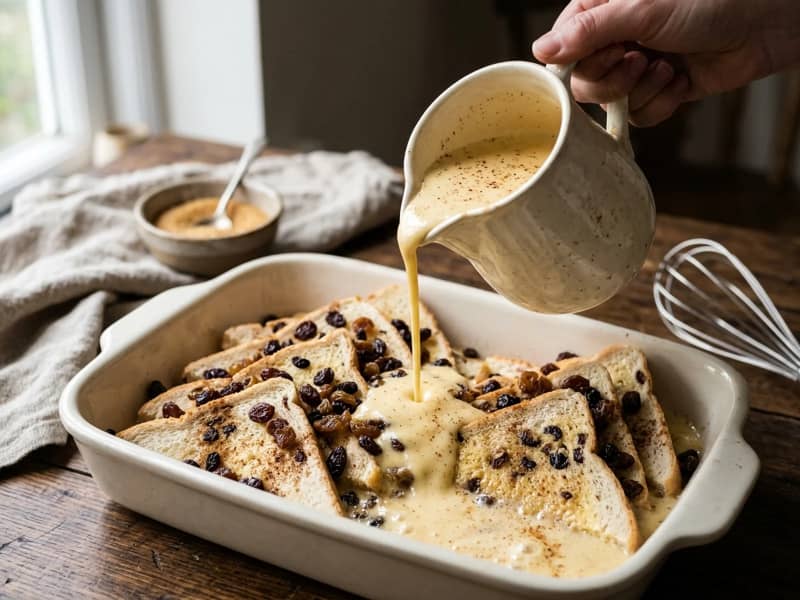
- In a large jug, whisk the eggs, milk, cream, caster sugar, vanilla and cinnamon until the sugar has dissolved and the mixture is smooth. For a very smooth custard, pour it through a fine sieve.
- Pour the custard slowly over the bread, spooning it over any exposed pieces. Press the bread down gently with the back of a spoon so that it sits in the custard, then sprinkle the demerara sugar over the top. Leave it to soak for 30 minutes at room temperature. If some bread still looks dry, spoon over a little more of the custard from the dish.
 5. About 15 minutes before the soaking time ends, heat the oven to 180°C (160°C fan/gas 4) and put a shelf in the middle.
6. Bake for 30–40 minutes, until the top is golden brown, the edges of the bread are crisp and the custard is just set. The centre should wobble only slightly and no liquid should ooze when you press the bread near the middle. If the top browns before the custard is set, cover the dish loosely with foil.
Chill or Set
- Leave the pudding in its dish for 5–10 minutes. The custard finishes setting as it rests, and the pudding cools to a comfortable eating temperature. Serve warm.
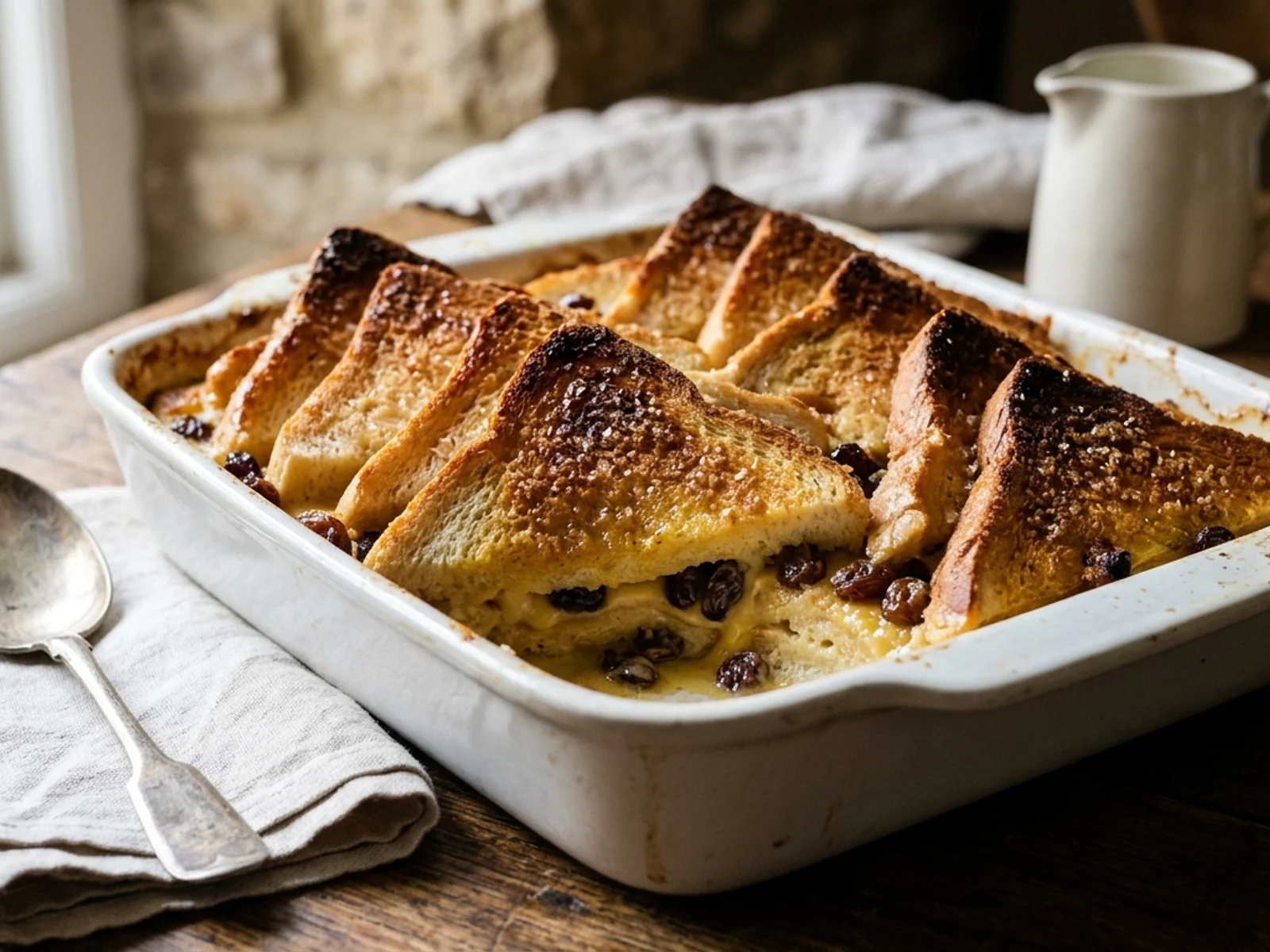
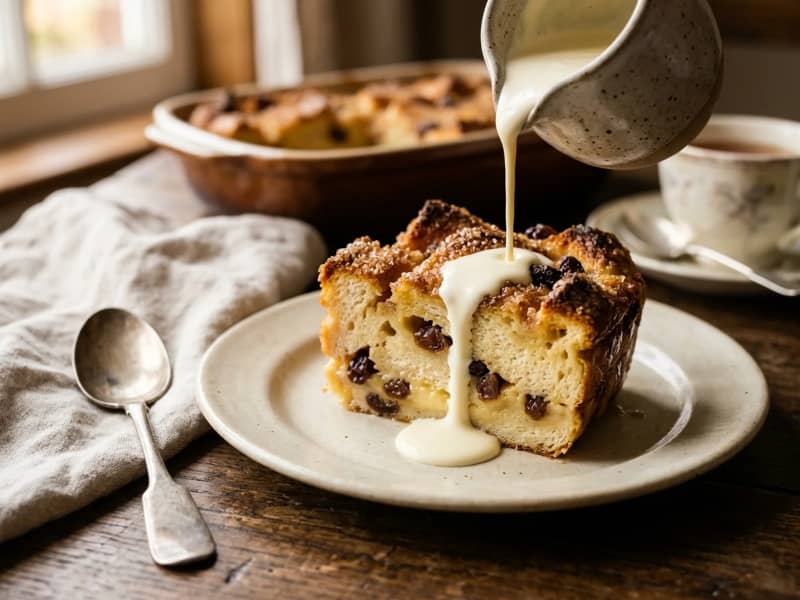
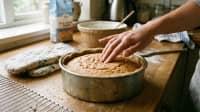
Slices of buttered bread are layered with raisins, soaked in a gently spiced vanilla custard and baked until golden. This traditional British pudding transforms everyday ingredients into a soft, comforting dessert with a lightly crisp surface.
- 20 × 25cm shallow ovenproof baking dish (approx. 1.5–2 litre capacity)
- Small bowl (for soaking raisins)
- Large measuring jug or mixing bowl (for custard)
- Balloon whisk
- Butter knife or small palette knife
- Fine sieve (optional, for ultra-smooth custard)
Adjust yield quantities or check items off as you prep.
- Plump the raisins in just-boiled water for 5–10 minutes, then drain and pat dry. Grease the dish with a little of the butter and spread the rest over one side of each slice of bread.
- Cut the slices into triangles and layer half in the dish, buttered side up, with half the raisins. Add the rest, tucking the top raisins down between the slices.
- Whisk the eggs, milk, cream, caster sugar, vanilla and cinnamon until smooth. Sieve if you like.
- Pour the custard over the bread, press the bread down gently and sprinkle with demerara sugar. Leave to soak for 30 minutes at room temperature.
- About 15 minutes before the soak ends, heat the oven to 180°C (160°C fan/gas 4).
- Bake for 30–40 minutes until golden, with crisp edges and a custard that is just set. Cover loosely with foil if the top browns too quickly.
- Leave the pudding to rest for 5–10 minutes so the custard finishes setting, then serve warm.
Decorating and Serving Ideas
Spoon the pudding into shallow bowls and serve it warm with pouring cream, hot vanilla custard, clotted cream or a scoop of vanilla ice cream. A light dusting of icing sugar or a little warmed apricot jam brushed over the top gives the surface a gloss.
Tips for the Best Results
- Use slightly dry bread
- Dry slices take up custard without collapsing into paste. If your bread is very fresh, leave the slices out for an hour or two, or dry them in a low oven for a few minutes, before you butter them.
- Check that the bread is covered
- Press down any slices that are sticking out, and spoon custard over them. Bread that stays dry on top bakes tough, so add a splash of milk if you run short.
- Keep the heat moderate
- Egg custard sets at a low temperature, and the proteins squeeze out liquid and turn rubbery if it is overheated, so start checking at 30 minutes rather than leaving it until the end.
- Protect the top
- The exposed tips are meant to turn crisp and golden, but they can darken quickly. Cover the dish loosely with foil if the top is browning faster than the custard is setting.
- Tuck the raisins in
- Raisins sitting on the surface dry out and can burn, so push them between the bread slices.
- Match the dish to the amount
- A 20 × 25cm dish about 5cm deep holds the bread and custard in a layer of the right depth. A smaller, deeper dish will take longer to set in the middle.
How to Store and Freeze Bread and Butter Pudding
- Cooling
- Let the pudding cool at room temperature, then cover it and put it in the fridge or freezer within one to two hours.
- Fridge
- The Food Standards Agency (FSA) has no guidance specific to this pudding, so these are its general rules for leftovers. Keep the fridge between 0 and 5°C and eat the pudding within 48 hours. Some published recipes allow three days, but 48 hours is the FSA's figure.
- Make-ahead
- Once the custard is poured over, you can cover the dish and keep it in the fridge before baking. One published recipe allows up to 24 hours. Do not soak it for longer than the 30 minutes in the method at room temperature. A cold dish may need a few extra minutes in the oven.
- Freezing
- Egg custard can separate and turn watery after freezing, and published advice disagrees about whether to freeze this pudding before or after baking, so expect some change in texture. If you freeze leftovers, do it as soon as the pudding has cooled, with the freezer at around −18°C. The FSA sets no time limit for the freezer.
- Defrosting
- Defrost in the fridge overnight. The FSA says to use food within 24 hours of it being fully defrosted.
- Reheating
- Cover loosely with foil and warm portions in the oven at 150°C (130°C fan) for about 15–20 minutes, until steaming hot in the centre. The FSA advises reheating leftovers only once, so reheat just the portion you plan to eat.
- Where this applies
- This follows FSA guidance for England, Wales and Northern Ireland. Food Standards Scotland says defrosted food can be used within one to two days.
Substitutions and Variations
- Brioche, panettone or hot cross buns
- use about 250–300g in place of the white bread, and leave out the raisins if the bread already contains fruit. Start checking the custard at 30 minutes.
- Sultanas or currants
- use the same weight in place of the raisins.
- Orange or lemon
- add the finely grated zest of half an orange or lemon to the custard.
- Nutmeg
- use a pinch of freshly grated nutmeg in place of the cinnamon.
- Lighter custard
- use 450ml of whole milk and no cream. The pudding will be less rich.
- Water bath
- for a gentler bake, stand the dish in a roasting tin and pour in hot water to come halfway up the sides, then bake as above, checking from 30 minutes.
- Apricot glaze
- warm 2 tbsp of sieved apricot jam with 1 tbsp of water and brush it over the pudding as soon as it comes out of the oven.
Frequently Asked Questions
- Why is my pudding soggy or pasty at the bottom?
- Very fresh, soft bread tends to collapse in custard. Use slightly dry bread and make sure the pudding bakes until the centre is just set rather than wobbling loosely. Letting it rest for 5–10 minutes also helps.
- Why is the top dry in places?
- Bread left above the custard bakes dry. Press the slices down, spoon custard over any exposed pieces and check the pudding's colour from the 20-minute mark, covering it loosely with foil if it darkens quickly.
- How can I tell when it is done?
- Look for a golden top, crisp edges and a centre that wobbles only slightly. No liquid should ooze when you press the bread near the middle, and a knife pushed into the centre should come out clean or almost clean. If you use a probe thermometer, America's Test Kitchen looks for about 77°C in its bread pudding.
- Do I need to bake it in a water bath?
- No. Many home recipes bake bread and butter pudding without one, as this method does. A water bath gives gentler heat, which can help if your oven runs hot, but the dish will take a little longer to set.
- Do I have to use white bread?
- No. Brioche, panettone and hot cross buns all work, because they soak up custard well. Use about the same weight and keep an eye on the pudding as it bakes.


Reviews (0)